
Combat Arts Leaders We’re Inspired By
We're inspired by in the martial arts, are those who dedicate themselves to mastering combat arts and pushing the boundaries of what is possible. These warriors embody discipline, determination, and a relentless pursuit of excellence. They inspire us not only with their physical feats, but also with their mental fortitude and spiritual strength. From the legendary Bruce Lee to the modern-day MMA champions, these combat artists continue to amaze and inspire us with their skill, passion, and unwavering commitment to their craft.
James Figg
Bare-knuckle boxing (London Prize Ring rules) was established in 1719, by James Figg. He founded the first school of boxing and was credited as the founder of Boxing. His student, Jack Broughton, created the first set of rules for bouts in the Amphitheatre on Tottenham Court Road, London in 1743. The Broughton Rules, as they were known, evolved into the London Prize Ring Rules in 1838 and revised in 1853 due to too many deaths in the ring. These rules, and subsequent revisions, such as the Marquess of Queensberry Rules, gave way to the rules of modern boxing, including gloves, banning “butting” and “purring,” slang for kicking a man when he was down, scratching, biting, and gouging.
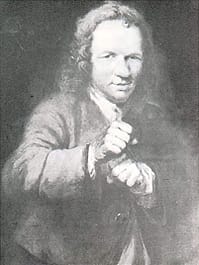
This led to bare-knuckle fighting becoming illegal. Forced underground or to the US, bare-knuckle boxing continued with less upstanding members of society. The resurgence in the 1970s came from underground brawls become more commercially profitable. Today, the art revives under close review.
Jigoro Kano
Founded Judo in 1882, the focus is to throw or takedown an opponent to the ground and lock them in place. This martial arts focus on locks and chokes. Although Jujitsu in practice, Judo focuses more on the soft part of the skills, believing that the soft practicality of the art will overcome hard striking techniques. One of the most popular forms of Japanese martial art outside of Japan, Akira Kurosawa films utilize Judo extensively. Kano combined the throwing techniques of the Kito-Ryu and the choking and pinning techniques of the Tenjin Shin'yo-Ryu.

In 1915, Kanō gave this definition to Judo:
"Judo is the way of the highest or most efficient use of both physical and mental energy. Through training in the attack and defense techniques of Judo, the practitioner nurtures their physical and mental strength, and gradually embodies the essence of the Way of Judo. Thus, the ultimate objective of Judo discipline is to be utilized as a means to self-perfection, and thenceforth to make a positive contribution to society."
Miyamoto Musashi
known as Japan's greatest swordsman, invented the two sword style "Hyōhō Niten Ichi-ryū Kenjutsu" and authored the warrior philosophy work "The Book of Five Rings." He is the stuff of legend since his death in 1645. He used psychological tactics and his immense strength to defeat opponents in a straight-ahead style that married brute force and masterful technique. He remained undefeated in over 60 head-to-head duels.

Dr. Adel Boulad
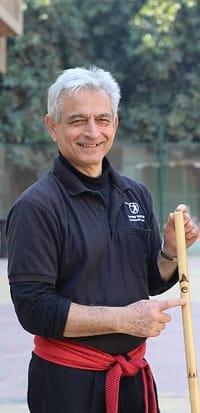
Is the current father of Modern Tahtib. This martial art is one of the oldest recorded martial arts, originating in Ancient Egypt and Nubia. Popular throughout the Middle East, it’s also called Fan A'nazaha wa-Tahtib, translated as “the art of being straight and honest through the use of the stick.”
Tahtib is commonly a performance martial arts in modern times, although there are branches of various Middle Eastern military groups that still use this art. Tahtib primarily is attacks against the opponent’s head, to crush the opponent’s skull. When certain groups of African Americans were brought into slavery, some of the skills turned into dances, which helped preserve the culture.
Bodhidharma
Shaolin emerged from The Shaolin Temple and the Hainan province of China. According to legend, thirty years after Shaolin was founded, Bodhidharma, was refused entry into the monastery. Meditating for nine years, he developed a specialized set of exercises. After returning, he found that the monks unfit and combined the exercises with the meditation, along with martial arts of many retired soldiers turned monks. This specialized martial arts began the foundations of Shaolin.

Helio Gracie
Gracie style jiu-jitsu formed from Brazilian jiu-jitsu and one of the most popular in the world. The Gracie style focused on a softer, more pragmatic adaptation. Helio combined the methods of ground fighting Judo with other forms and the unique style was born. Throughout his career, he was challenged by many traditional fighters and Judo experts, most of the contests he won.

Source: Satorijits, CC BY-SA 3.0, via Wikimedia Commons
Helio's son Rorion Gracie brought BJJ to the US, while another son Royce Gracie became the UFC champion. His third son, Rickson Gracie, is considered the best BJJ practitioner in the world.
Hatsumi Masaaki
Founded the Bujinkan Dojo, currently, the only nine schools of ninjutsu still practiced. His teacher was the famous Takamatsu Toshitsugu, the Mongolian Tiger, who gathered the nine schools and passed the soke titles to Hatsumi. The ninja's art. Most of the schools of ninjutsu originated from samurai arts. They were developed either from disgraced samurai wishing to perfect their self-defense skills or from the Yamabushi looking to protect themselves. This art doesn't qualify as koryuu. Aside from learning the traditional and accepted forms of self-

defense, weaponry, and hand-to-hand combat, most schools also learned the skills of disguise and impersonation, piracy, espionage, and information-gathering. During the Tokugawa era, several of the more prominent schools of ninjutsu were utilized as a national police system, providing the only information network throughout the country of Japan that was both reliable and trustworthy. Unfortunately, many disreputable practitioners of other arts Incorporated violent techniques and simply called them ninjutsu, discrediting the art.
Zhang Sanfeng
Was a Chinese Taoist who invented T'ai chi ch'üan. T'ai chi Ch'uan is categorized under the Wudang grouping of Chinese martial arts. Although most people don't consider Tai chi the martial arts, it has particular combat origins. Today, Tai Chi is practiced mostly by aging populations, focusing on inner peace and dynamic movement. Tai chi focuses heavily on yin and yang, balancing the principles of actions, power, and discipline. There are five typical styles, with numerous schools branching off of the main ones. Most styles can be traced back to the Chen style. In the US, Tai Chi was first openly practiced in 1939.

Hwang Kee
Founded Tang Soo Do as primarily a Korean striking martial art during the 20th century. It's thought of as the origin of several lesser schools such as Soo Bakh Do and Hwa Soo Do. To distance themselves from the Japanese occupation, Koreans divided their martial arts into a form of Tang Soo do and taekwondo. However, practitioners of tang soo do found themselves rebelling against government interference and eventually took the art to the Americas.

Source: koreadangsoodo.org
It's one of the few traditional martial arts to focus solely on self-defense, generally avoiding sports orientation. Popular actor Chuck Norris practices the art, as well as Dennis Alexio, Hector Pena, and Cynthia Rothrock.
Boukar Djilak Faye
One of the oldest known and recorded Laamb Wrestlers in Senegambia was Boukar Djilak Faye (a Serer) who lived in the 14th century in the Kingdom of Sine. The Serer people of Senegal continue a traditional form of wrestling that is slowly spreading as one of the most powerful and beautiful ways of wrestling. Initially, this wrestling was among the initiation rites among the Serer people and is currently one of the national sports.
Traditional Senegalese wrestlers are considered the strongest and most of virial of the Senegalese men. Typical of this wrestling type, like many others, is to wrestle the opponent to the ground. In West Africa, this wrestling has become a significant spectator sport with various groups training throughout Africa.
Nai Khanom Tom
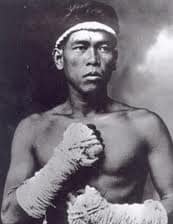
Is the father of Muay Thai and was one of the Siamese prisoners after the Burmese invasion. He was selected by the occupying king to have a match to show off the fighting style of the local people, believing his troops would win. After defeating ten opponents in a row, even amongst the rumor of magic aiding the Siamese fighters, the king decreed the Siamese people blessed and released them. The legend grew around the story, and the Thai people are very proud of their heroes.
IP Man
Made famous from his movies and training of military personal, practiced various styles of Wing Chun. His students, including Bruce Lee, became some of the most prominent leaders within the martial arts community.
When Ip Man was 15, he began training with Sifu Leung Bik in Hong Kong. By the age of 24, Ip Man returned to Foshan; contrary to popular belief, he became a policeman instead of formally running a Wing Chun school. He did, however, teach several of his subordinates, his friends and relatives.
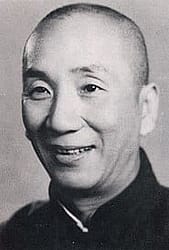
At the end of 1949, the Chinese Communist Party won the Chinese civil war. Ip Man, being an officer of the opposing Kuomintang political party, decided to escape to Hong Kong without his family when the Communists came to Foshan. In Hong Kong, Ip Man opened a Wing Chun martial arts school in which he was challenged extensively by the local masters. His victories over other martial artists helped to bolster Ip Man's reputation as a teacher. In 1967, Ip Man and some of his students established the Hong Kong Ving Tsun Athletic Association.
Ngo Dong
Founded Cuong Nhu in 1965, and it is a martial art that blends various styles, including Shotokan Karate, Aikido, Judo, Wing Chun, Vivinam, Tai chi, and boxing. It's derived from the translation for "hard and soft" in Vietnamese. Various styles of art were put together to compensate for some of the lack of others. O-sensei Dong created the mixed martial arts style he needed to include striking, kicking, and grappling, as well as locks and throws to meet the needs of today's society. Based in Jacksonville, Florida, some of the students have gone on to establish their own dojos throughout the country.

Source: cuongnhu.com
Edgar Sulite
Was the creator of Lameco Eskrima. This Philippine martial art emphasizes weapon-based fighting primarily with sticks, often called eskrima. It also uses open-handed techniques, bladed weapons, and other improvised weapons. There's a significant emphasis on bladed arms, as Filipino culture relied heavily on blades. In modern times, Japanese arts such as karate and Judo influenced the teachings of Arnis. However, there is more of a movement in Europe to bring back the pure martial arts, as is now primarily focusing on self-defense, and knife attacks are much more prevalent in Europe.

Source: Chfroehlich, CC BY-SA 3.0, via Wikimedia Commons
Much of eskrima is taught based on street fighting and resistance movements. Although there is no official ranking system, other than the instructor, several schools have adopted belt ranks to help keep track of students. He is noted for training Dan Inosanto, Ron Balicki, Larry Hartsell, Fred Degerberg, and Diana Lee Inosanto.
Dong Haichuan
Formed Baguazhang in the 19th century by combining martial art knowledge with a form of Taoist meditation of circle walking. It is one of the three central Chinese martial arts of the Wu-Tang School, Bagua Zhang means "eight trigram palm." It often practices circle walking, and this is considered an integral part of the training.
This form uses open hand techniques, as well as several weapons such as the broad sword, staff, spear, and knife, many of which are oversized. The practitioners develop their ability to flow around strikes and objects.

Choi Yong-Sool
Founded Hapkido after training in Japan, learning styles that would evolve into Aikido. Based on Japanese martial arts, Hapkido developed in the twentieth century after the Japanese occupation. It incorporates many schools with multiple focuses that include different foreign practices, mainly Chinese. Hapkido is credited with establishing the system integration and incorporation over the martial arts within the Korean martial art. Hapkido focuses on joint locks and throws rather than striking. Considered a moderate martial art, it focuses neither too much on the hard or soft techniques.

Source: Tokaria, CC BY-SA 4.0, via Wikimedia Commons
Geo Omori
Begun in 1909, Geo Omori started the first school amalgamating several techniques from Japanese martial arts. There are many similarities to Kodokan Judo because Mitsuyo Maeda brought Jodo to Brazil in 1914 and became one of the experts to help form the Brazilian Jiu-Jitsu fighting style. The lineage took much from Sumo wrestling and other ground fighting styles. Getting the opponent pinned and deriving submission is a primary goal in the competition.

Masutatsu Ōyama
Also known as Mas Oyama, founded Kyokushin Karate, which is considered the first full-contact karate. He developed a reputation for being rough with his students, focusing on real strikes and blows to toughen them up. Kyokushin places a high degree of emphasis on breaking boards and other objects to prepare for striking real targets. Kyokushin means "the ultimate truth" and is a philosophy of self-improvement, discipline, and hard training. It has influenced different martial arts and fighting styles, such as MMA and BJJ.

Morihei Ueshiba
Founded Aikido as a result of his martial studies, philosophy, and religious beliefs. Aikido focuses on redirecting attacks away from the receiver. It incorporates several different techniques that include locks, throws, and grappling. Aikido translates into "the way of unifying life energy," and there is a significant focus on mastering the self. A rather young martial art, it was developed in the early 1900s, therefore making it not koryuu.

Highly effective for self-defense, Aikido retains much of the formalization and dojo mindset, and that can be seen with uniforms, restrained attacks, and traditional weapon practice. However, the art is plagued with the stigma that it is considered too soft, and focuses too much on sports or a formality mindset that deplete it of its martial capability.
Euclydes Hatem
Originated this martial art in Rio de Janeiro and is a combination of wrestling and Judo, mixed in with various strikes. Established in 1927, Luta Livre took many of the challenges of Brazilian Jiu-Jitsu and filled in the gaps. This style of martial arts gained prominence when Euclydes Hatem forced George Gracie to submit during a match in 1940.

Over the years, BJJ and Luta Livre have had fierce competitions and a healthy rivalry. Because of the types of rules in Luta Livre, it has fallen out of favor in recent years losing out to the more popular Brazilian jiu-jitsu & MMA. Luta Livre is either too strict for these types of fighting’s or too loose.
Gichin Funakoshi
Founded Shotokan Karate, which is considered -the founder of the various arts now known as karate. This art focuses on purging oneself of selfish evil thoughts and embodies the essence of the heart sutra. Karate is an Okinawan martial art developed in the Ryukyu kingdom.
Very closely associated with the Fujian White Crane Kung Fu, it primarily uses open-handed and striking techniques including punching, kicking, and strikes with the elbow and knees.
And some schools, grappling and throws have been included. What sets karate apart from any other martial arts is the lack of weapon training. The various phases of karate have been around for nearly 1,000 years, making it older than koryuu. It is generally believed that it was one of the first martial arts in Japan.

Source: en.wikipedia.org
Founded Shotokan Karate, which is considered -the founder of the various arts now known as karate. This art focuses on purging oneself of selfish evil thoughts and embodies the essence of the heart sutra.
Karate is an Okinawan martial art developed in the Ryukyu kingdom. Very closely associated with the Fujian White Crane Kung Fu, it primarily uses open-handed and striking techniques including punching, kicking, and strikes with the elbow and knees. And some schools, grappling and throws have been included.
What sets karate apart from any other martial arts is the lack of weapon training. The various phases of karate have been around for nearly 1,000 years, making it older than koryuu. It is generally believed that it was one of the first martial arts in Japan.
Bruce Lee
Jeet Kune Do is a Cantonese version of martial arts similar to a formless Chinese kung fu. Lee believed many of the schools hindered the students by focusing on kata and tournaments. His belief was a person must express themselves and have no limitations, and his form included attacks to the groin, jabs to the eyes, and other previously banned combat techniques.

Source:
He believed he was not creating new forms of martial art but rather uncovering the hidden depths of existing martial arts. He thought that the understanding of the martial arts depending on somebody practicing to the full extent, discarding what was unnecessary and keeping only what would serve the art.
George Lepine
Teaches the traditional martial art Okichitaw, which is based on the fighting techniques of the Plains Cree First Nation. It is considered a no-holds-bar martial art, it focuses on aggressive motions and following up an attack to ultimately end a fight. It was established in 1997 and Lepine learn many of the hunting and fighting practices from his elders. Historically, many of the techniques used in this martial arts were developed hunting and raiding parties and frequently used in battle. Lepine combined the traditional roofs with other martial arts such as Judo, TaeKwonDo, and Hapkido to help keep the native traditions alive.

Sankar Lal
An Indian-born, Poland-based Kalaripayattu master and Ayurvedic specialist teaches how myth, legend, and history integrate to form Kalaripayattu. Considered one of the oldest and most scientific martial arts in the world, Kalaripayattu is still practiced in parts of India. Training begins with an oil massage of the full-body, using the intentions to keep it agile and flexible. Many of the katas and skills include jumping, running, and somersaults— weapons, including swords, daggers, and spears, with the bow and arrow feature prominently.

Source: indiamart.com
It remains one of the most popular martial arts, surviving multiple upheavals until the British occupation. However, it resurged quickly after colonization ended. Possibly, the Bodhidharma was Kalaripayattu Master.
General Choi Hong Hi
Was a South Korean Army general and martial artist regarded as the Founder of Taekwon-Do. He is a controversial figure because of some past action. However, the principles of Tae Kwon Do are honorable and upstanding.
The most well-known Korean martial art, founded in 1955, is the national sport of Korea. With over seventy million practitioners, taekwondo is primarily used for self-defense as well as sports.
The primary focus is striking techniques that include the hand and leg strikes, blocks, throws, and dojangs.
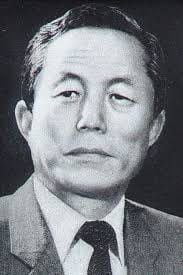
Source: Mehran Eisazadeh, CC BY 4.0, via Wikimedia Commons
The most well-known aspect of taekwondo is kicking techniques. Taekwondo might also be the oldest form of Korean martial arts, being referenced during the formation of a Korean Nation and founds the basis of military techniques
Bill Underwood
Bill Underwood created both Combato and Defendo martial arts that is currently being taught throughout Canada. Combato and Defendo were created in 1910, and 1945, respectively, specifically for use in law enforcement.
Combato was developed for use with military forces during World War II. Underwood's premise was to use these martial arts the help people defend themselves.

Source: martialask.com
After World War II, he believed that Combato was too aggressive and he instead focused on the application of self-defense, thus creating Defendo.
Chōjun Miyagi
Founded the Gōjū-ryū Karate school, it was one of the most prominent martial artists in Asia in the early 1900s. Some of Miyagi's more notable students were: Miyazato Ei'ichi, founder of the Jundokan dojo, Meitoku Yagi, founder of the Meibukan dojo, Seikichi Toguchi, founder of Shorei-kan Goju-Ryu, and Gōgen Yamaguchi who was the founder of the International Karate-do Goju Kai Association in Japan. It is rumored the famous Mr. Miyagi of the Karate Kid franchise was based on Chōjun Miyagi.

Ned and Ann Paige
Wen-Do is a self-defense art designed specifically for women; Wen-Do was created in 1964 using a combination of Jiu-Jitsu, Karate, and Judo. Although most other practitioners do not classify themselves as martial artists, they focus on self-defense and many of the principles that define a martial art.

Source: martialask.com
Wen-Do aims to help provide skills for women to avoid confrontation and abilities to get out of dangerous situations. Its popularity and effectiveness have begun spreading throughout the world.
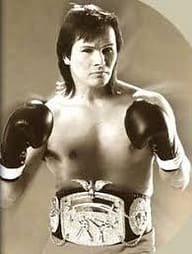
Benny Uriquidez a.k.a. "The Jet"
Is an American kickboxer, martial arts choreographer, and actor. He was a non-contact karate competitor who later pioneered full-contact fighting in the United States. Urquidez held six world titles in five different weight divisions and was undefeated in his 27-year career. His only loss came in a Muay Thai match, which was controversial.
Source:
Royce Gracie
Is considered to be one of the most influential figures in MMA history. He is a member of the esteemed Gracie BJJ Family and a UFC Hall of Famer. He is the tournament winner of UFC 1, 2, 4, and fought Ken Shamrock to a draw in UFC 5.
He popularized Gracie BJJ and revolutionized mixed martial arts as a result of his contributing to the movement towards grappling and ground fighting in the sport.
Alfred Avril
Tire Machèt was developed during the Haitian revolution around 1800, many rebel slaves only had machetes that they used to cut the sugar cane with to win their freedom from French colonization. This martial art focuses on the African combat system combined with French fencing with the use of machetes. Alfred Avril codified the first modern practice of a Haitian machete fencing.

Source: Generalrelative, CC BY-SA 4.0, via Wikimedia Commons
Remy Amador Presas
Is considered the founder of the modern Arnis system by merging traditional Philippian eskrima fighting with Shotokan Karate.
He started putting together the system in 1966, and it was formalized in 1969. One of the notable practitioners was Leo Giron, who founded the Bahala Na intelligence company, which served General Douglas MacArthur during World War II. The DC comic hero Nightwing is noted for using eskrima.

Source: Robert James DeMott, CC BY-SA 3.0, via Wikimedia Commons
Baxter Humby
The Canadian kickboxer known as "The One-Armed Bandit," specializes in Muay Thai, and is best known for his various kickboxing titles and budding movie career. He played the stunt double for Tobey Maguire in the film Spider-Man 3.
Muay Thai is the most famous from Thailand, although several other forms of Muay come from neighboring countries such as Vietnam and Laos. Muay Thai is referred to as "the art of 8 limbs," using points of contact on the body to mimic weapons. Historically, it was known as Siam boxing, only taking the current name after World War II.

Source: thescienceof8limbs.com
Ed Parker
Founded American Kenpo which has a basis in Japanese martial arts with a focus on modern-day street fighting. Many of the techniques used rapid foot movements called shifting that are similar to a boxing style.
American Kenpo disregards many of the esoteric concepts found in Asian martial arts and replaces them with more Western scientific principles. Today, Kenpo has several variations as other teachers continue developing the training under various paths. Students can find American Kenpo and Japanese Kenpo side by side in some schools.

Source: central coast karate.com
Seishiro Okazaki
Danzan-ryū was founded by Seishiro Okazaki in Hawaii. Based upon traditional Japanese martial arts, Okazaki founded his martial art on his own experience recovering from what might have been tuberculosis. Many parts of his system include Hawaiian martial arts, escrima, boxing, and wrestling.
Famous in Hawaii and throughout the American West, Danzan-Ryu is a popular martial art. It expanded with many variations under the umbrella system that focus on different aspects of the training, including specialties for children, women, and those who wish to incorporate more religious practice.

Ernest Emerson
Emerson Combat Systems is a modern combat system developed by Ernest Emerson. He put together a defensive martial arts and combat techniques system that he taught to military and law enforcement.
Many of the methods used guns, knives, and other modern weapons unknown to many traditional martial arts. Many of the techniques based on physiological responses to stress and how gross motor skills become reduced during stressful situations. Many of the methods rely on regular street clothing rather than martial arts gi, and a significant emphasis placed on physical fitness.

Source: en.wikipedia.org
Karl Gotch
Shootfighting is a combination of martial art and combat sport that is truly a mixed martial art. It was an offshoot of mixed martial art competitions in Japan, with the incorporation of more professional wrestling and boxing as used in the United States. It began unofficially in the 1970s when Karl Gotch taught Japanese wrestlers various wrestling techniques. From there, it grew to the 1990s to a new organization.

Muhammad Ali
Born Cassius Marcellus Clay Jr. is perhaps one of the most significant sports figures of all time. He won a gold medal in the light heavyweight division at the 1960 Summer Olympics, and the world heavyweight championship from Sonny Liston in a major upset at age 22 in 1964.
In 1966, Ali refused to be drafted into the military, citing his religious beliefs and opposition to the Vietnam War. His actions as a conscientious objector to the war made him an icon for the larger counter-culture generation, and he was a high-profile figure of racial pride for African Americans during the civil rights movement.
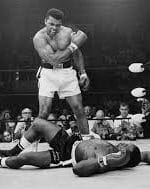
Source: nbcnews.com
Ali retired from boxing in 1981, after 26 years of training, shortly before he made public his diagnosis of Parkinson's. His fight with George Foreman, known as The Rumble in the Jungle, was called "the greatest sporting event of the 20th century."
Dan Inosanto
A Filipino-American martial arts instructor best known as a training partner of Bruce Lee. He was a student of Ed Parker, from whom he received a shodan rank in American Kenpo. Inosanto is one of three people who have been appointed to teach at one of the three Jun Fan Gung Fu Institutes under Bruce Lee. He's a keen practitioner of escrima and silat.

Source: Webtraktion, CC BY-SA 4.0, via Wikimedia Commons
Robert Trias
Created Shuri-ryū, an eclectic martial art, it was one of the first schools to have a Caucasian man teach martial arts. In 1946, this martial arts began in Arizona. Trias learned martial art techniques during World War II, specifically in the Solomon Islands.
Upon returning home to the United States, he opened his school and began teaching mixed martial art. This martial art uses various punches, kicks, and blocks combined with joint locks and throws supplemented by traditional weaponry.

Source: usadojo.com
It has all the hallmarks of what many people consider American martial arts schools that include set kata, belt ranks, and frequent testing.
Tony Blauer
SPEARS System founded by Tony Blauer, this scientific self-defense system focuses on escaping violent situations before resorting to physical techniques. That uses a startle-flinch response to against ambush attacks. Based upon training the reticular cortex of the brain, fear responses are replaced by practiced movements that help give a person time to analyze a situation and escape. Currently, these techniques are used by many police forces and military organizations, including the US Department of Defense.

Source: blauerspear.com
Yagyū Munenori
Was a Japanese swordsman, the son of Yagyū Munetoshi, and founder of the Edo branch of Yagyū Shinkage-ryū school. Author of the Heihō kadensho (1632), his acclaimed treatise on practical swordsmanship demonstrated how the various techniques could be applied to life and politics. His sons, Yagyū Jūbei Mitsuyoshi and Yagyū Munefuyu, were also famous swordsmen.

Steven K. Hayes
To-Shin Do The strict self-defense and security martial art was founded by Steven Hayes in 1997. The principal focuses on using Japanese martial art techniques in a purely modern setting. This is going to survive riots, gunfire, and the protection for a dignitary in security situations.
Practitioners of this art learn the threats of modern society, including handgun training, emergency medical treatment, security details, and how to deal with law enforcement.

Source: ninjaselfdefense.com
Akebono
The first non-Japanese-born wrestler to achieve the rank of yokozuna. His joining the Sumo community was controversial, but it led to many non-Japanese joining Sumo stables. Many non-Japanese became introduced to Sumo because of him. Although considered a national sport today, Sumo was initially a combat art, first recorded in 23 BCE.

Source: Philbert Ono, CC BY-SA 3.0, via Wikimedia Commons
Nihat Yiğit
Sayokan is a modern Turkish martial art created by Nigat Yigit in 1999, this martial arts focuses on concepts of self-defense rather than kata and stances. Much of its system bases on Asian principles, and utilizes the Ottoman style wrestling and striking techniques. One of the central tenets of Sayokan is twisting the core, understanding the attack, and forcing the opponent to overextend.

Source: sayokanalp.com
San Kim
Grand Master San Kim is the founder of the Cambodia Bokator Federation and the Cambodia Bokator Academy. The term Bokator translates as pounding a lion from the words bok meaning to pound and tor meaning lion. The Pol Pot regime persecuted those that practiced traditional arts; as such, practitioners were either exterminated by the Khmer Rouge, fled as refugees, or stopped teaching. Martial arts were completed outlawed when the Vietnamese occupation of Cambodia began by the Khmer Rouge regime. San Kim Sean fled Cambodia to the United States under accusations by the Vietnamese of teaching Hapkido and Bokator.

Source: Ali.qaradaghy23, CC BY-SA 4.0, via Wikimedia Commons
Once in America, San Kim Sean started teaching Hapkido at a local YMCA in Houston, Texas. After living in the United States and teaching and promoting Hapkido, In 1992, San Kim Sean returned to Cambodia to revive and give Bokator back to his people.
Rickson Gracie
Is a Brazilian 9th-degree red belt in Gracie Jiu-Jitsu. He is the third oldest son of Helio Gracie and brother to Rorion and Relson Gracie, and half-brother to Rolker, Royce, Robin and Royler Gracie. He is widely considered to be the best fighter of the Gracie clan, and one of the best BJJ artists in the world. In November 2014 he became an inductee of the Legends of MMA Hall of Fame, alongside Big John McCarthy, Pat Miletich, and Fedor Emelianenko. In July 2017, he was promoted to red belt, the highest ranking in BJJ.

Source: facebook.com
Sugar Ray Robinson
Was a professional boxer after WWII in the welterweight and middleweight divisions. Regarded as the greatest boxer of all time, Robinson holds the third-longest winning streak of all time (91). He defined a boxer-puncher, using a more formless style to defeat his opponents. He had a 25-year career, one of the longest, and returned to the ring after a few year break. During this time, he took up dancing to keep in shape and declared preparing for a dance performance was far harder than training to box.
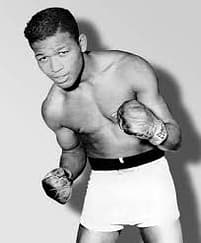
Source: boxingfandom.com
Maishel Horovitz
Kapap is the Hebrew acronym for Krav Panin el Panin is this defense form developed in the late 1930s in preparation for military duty, incorporating many martial arts styles including judo, jujitsu, karate, boxing and street fighting. Maishel Horovitz developed the short stick fighting method in response to British policeman clubs. This form of military training and close combat fighting served Israel well during their fight for Independence.

Source: martialask.com
Jirokichi Yamada
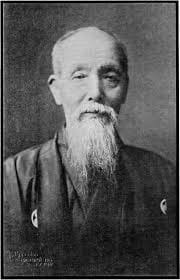
Was the 15th and last sōke of Kashima Shinden Jikishinkage-ryū, a koryū of kenjutsu. He was a student of the 14th sōke, Sakakibara Kenkichi.
In 1927, he published a book of all five classical kata that originated from the sixteenth century.
Imrich "Imi" Lichtenfeld
Krav Maga is a military self-defense system developed for the Israeli Defense Forces. IImi Lichtenfeld combined his experience with street fighting with other martial arts to defend various Jewish settlements against numerous attacks the mid to late 1930s.
Krav maga has been distilled down and modified to emphasize aggression and highlight self-defense. Many of the techniques focus on wearing full military uniforms against guerrilla fighters. Principles of Krav maga include simultaneous attack and defense, preemptively attacking, and simple techniques.

Source: xkm-midtown.com
The civilian version of Krav maga downplays many of the more lethal techniques and puts more emphasis on sparring and self-defense. While recognizing that in military situations have no rules, The International Krav Maga Federation establish specific standards for sparring in competition.
Rhonda Rousey
Is a former professional wrestler, actress, and former mixed martial artist. She signed to the WWE as a wrestler since 2018. She is the first American woman Olympic medal (bronze) in Judo at the 2008 Summer Olympics, along with 39 other medals throughout the world. She then went on to MMA, winning numerous titles and the most championships for women. In 2018, she became the first female fighter inducted into the UFC Hall of Fame.

Source: Narek75, CC BY-SA 4.0, via Wikimedia Commons
Laila Ali
Is the daughter of Muhammad Ali and an undefeated professional boxer. She began her career controversially, partly because her father did not want her to become a boxer and partly that some attributed her success to riding on her father's name. After retiring undefeated, she became a noted actress, helping to normalize a healthy, strong woman's body on television.

Source: Gage Skidmore, CC BY-SA 3.0, via Wikimedia Commons
Joe Louis
Known as the Brown Bomber, Joe Louis reigned as the world heavyweight champion from 1937 to 1949. He is considered to be one of the greatest heavyweight boxers of all time. His championship reign is the single longest lasting over 140 consecutive months, during which he participated in 26 championship fights. More importantly, Louis has a significant cultural impact well outside the ring. He is widely regarded as the first person of African-American descent to achieve the status of a nationwide hero within the US.

Source:
He was a focal point of anti-Nazi sentiment leading up to and during World War II. He was also instrumental in integrating the game of golf, breaking the sport's color barrier in America by appearing under a sponsor's exemption in a PGA event in 1952.
Georges St. Pierre
Is widely regarded as one of the greatest fighters in mixed martial arts history. He studied wrestling, Brazilian Jiu-Jitsu and Karate in his youth and earned various black belts. He debuted in the MMA in 2004 and swiftly rose as one of the better contenders. He is a three-time former UFC Welterweight Champion, having won the title twice and the interim title once between November 2006 and April 2008. He was ranked as the #1 welterweight in the world for several years by leading combat arts publications.
He retired as the reigning Welterweight Champion in December 2013. During his reign he held the record for most wins in title bouts and the second longest combined title streak in UFC history (2,204 days) while defending his title nine consecutive times. He returned to the Octagon in November 2017 at UFC 217, where he defeated Michael Bisping by submission to win the Middleweight title. That accomplishment made him the fourth fighter in the history of the UFC to be a multi-division champion
Amanda “The Lioness” Nunes
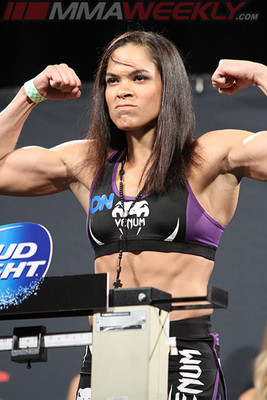
Is a BJJ UFC practitioner and is considered the greatest Mixed Martial Artist of all time (as of June 2020). She became the first woman with a two-division UFC champion and third to hold in two weight classes simultaneously. She is the only fighter in UFC history (male and female) to hold and defend two titles simultaneously.
Source:
Mikhail Ryabko and Vladimir Vasiliev
Mikhail Ryabko and Vladimir Vasiliev are the founders of the Russian martial arts Systema, also known as “The System”; this Russian martial art incorporated various traditional fighting styles of the Cossack and Eastern Slavic peoples and was used primarily by Soviet Special Forces. Many of the fighting styles can be traced back to the 10th century. Many of the schools incorporate Christian Russian Orthodoxy philosophy and principles into their system. The goal is the balanced violence and self-defense to bring out the Various schools under different structures begin emerging after the fall of the Soviet Union in the 1990s.

Source: Vadim Starov, CC BY-SA 4.0, via Wikimedia Commons
Bernard Pariset
Atemi Ju-Jitsu (Pariset) or Pariset jujitsu became established in France in the 1940s by Bernard Pariset. He became inspired by the original Kano jujitsu and disillusioned by how much real combat was removed from judo to make it acceptable in modern Japanese culture.
Atemi with added to the classification to show its focus on striking techniques and emphasis on breaking the opponent's balance. As other arts became more popular throughout Europe, Atemi jiu-jitsu began to decline. However, in the early 2000s, MMA saved this art.

Source: worldbudokan.org
Masamichi Noro
Founded Kinomichi which is a martial art based on Japanese Aikido. It was established in Paris, France in 1979. Noro's teachings use energy and heart from the European concept of energy rather than the Eastern concept of chi.
The techniques incorporate stick, sword, and unarmed movements. Although there is no ranking in Kinomichi, there are different levels of study.

Source: Centreinternationaldukinomichi, CC BY-SA 3.0, via Wikimedia Commons
Maurice Sarry
La Canne also known as cane fighting, this martial art was used the military and police forces until World War II. In the late 1970s, canne d'arme was revitalized by Maurice Sarry. It is currently part of the Federation de Savate Boxe Francais.

Viktor Spiridonov and Vasili Oshchepkov
Sambo/Sombo is a Soviet martial art, Sambo is recognized throughout the world as a legitimate martial art and was approved by the Soviet government for servicemen and the public. Before the Soviet Revolution, Viktor Spiridonov and Vasili Oshchepkov traveled to Japan and studied Judo and other Japanese martial arts. Both of these founders independently study different styles, then combined them into Sambo.

Often called free wrestling, it combines many of the aspects of wrestling and Judo with harder martial arts styles that include chokeholds, striking, and grappling. It eventually developed into an officially recognized Olympic sport; however, in 1992, it was suspended with other demonstration sports.
Edward William Barton-Wright
Bartitisu created in 1898 by Edward William Barton-Wright, this eclectic martial art combining elements of Boxing, Jujitsu, Canne de combat, and French Kickboxing (Savate) in the late 1890s.
However, it quickly died. But, in 1903, it was immortalized as “Baritsu" by Sir Arthur Conan Doyle in one of his of the Sherlock Holmes mystery stories as the preferred method of fighting by Holmes. Although nearly gone until 2002, Bartitsu is experiencing a revival. You can learn more at the Bartitsu Society, Bartitsu.org.

Source: en.wikipedia.org
Tu’umamao "Tino" Tuiolosega
Limalama (Samoa) is the Polynesian art of self-defense was created by Tu’umamao "Tino" Tuiolosega (1931 - 2011). Tuiolosega combined the Samoan language words lima (five) and malamalama (understanding), bringing them together to mean "knowledge and understanding," and translated it as "hand of wisdom." The art focuses on self-defense with quick movements between the flow. Tu’umamao "Tino" Tuiolosega was the son of a Royal Samoan family and learned numerous Polynesian self-defense martial arts.

Source: usadojo.com
What he discovered was considered sacred knowledge and only passed onto descendants of the Royal families. In 1950, he served within the U.S. Marine Corps and was a chief instructor in hand to hand combat training for the Marines and Naval personnel. Limalama takes the Samoan martial arts and combines it with Aikido, boxing, and other martial arts into a formal system available to people through personal and online training.
Featured Image Source: Yudin Dmitry, Standard License, via Shutterstock