
A Winning Formula: Key Components of Fitness for Combat Arts Success
In the demanding world of combat sports, Mixed Martial Arts (MMA), Boxing or competitive BJJ, fighters must foster and demonstrate a blend of physical traits (strength, agility, endurance, coordination, speed, power, dexterity, and flexibility) to outperform their opponent. It is critical that combat athletes recognize that achieving peak performance in combat arts strength and conditioning depends not only on understanding the key components of fitness but on building a strong base in each of those areas.
Each component of fitness plays a pivotal role in an athlete's performance and long-term development. This article will break down the essential MMA components of fitness and provide insight into how each one can enhance your MMA prowess.
The Key to MMA Performance
It takes years, decades, or even a lifetime to develop into a formidable martial artist or combat athlete. A combat athlete’s quest to become better never stops. What becoming a better “martial artist” or “combat athlete” means to you is what’s important here.
We can’t start a Strength and Conditioning program and expect to start pulling strikes as fast as Jose Aldo, or start shooting blast double-legs take-downs like Georges St-Pierre. It all starts with understanding the components of fitness.
Agility: Quick Moves, Quicker Victories in MMA
Think of watching the masterful Floyd Mayweather Jr., effortlessly dance around the ring, light on his toes, subtle direction changes and head slips, keeping him well out of harm’s way while making his opponents look foolish. You cannot hit something that’s not there.
This is a great, elite level example of sublime martial arts agility in action. It’s no secret that the best athletes possess many beneficial traits (we’ll talk about these in the coming paragraphs). However, the importance of agility, the ability to change speed and direction quickly and efficiently in response to what your opponent does, cannot be overstated in martial arts performance.
Think of Lyoto Machida bringing his karate-based style into the UFC octagon. His elusive, in-and-out movement made him extremely hard to hit and hard to pin down.
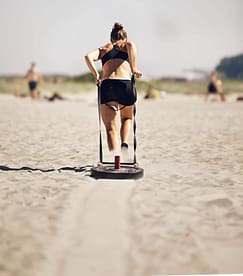
Source: Jacob Lund, Standard License, via Shutterstock
A more recent example is “The Notorious” Conor McGregor, who built much of his striking around movement, distance and angles.
Improving Combat Arts Agility
Agility training can sometimes be neglected when athletes focus instead on power or strength. However, without agility you can’t effectively take advantage of your strength. Agility, in this respect, should be seen as a foundation for high level performance.
Whether you want to be the elusive mastermind like Floyd Mayweather, or want to work angles and deliver powerful techniques, Conor McGregor-style…agility is fundamental to both.
Martial artists commonly build footwork and change of direction with ladders, footwork drills, hurdles and lateral sprint work. Those pre-planned drills are only part of the picture: agility in a fight means reacting to an opponent, so reactive drills such as mirror footwork, pad work where the holder calls or feeds the change, and controlled sparring train the decision-making side. We will discuss these methods, plus ways to train the following components of fitness, in our training pages section.
Coordination: Fine-Tuning Motor Skills for Combat Arts Precision
Coordination is the harmonious functioning of muscles to execute precise movements. In MMA, a high level of coordination aids in the delivery of complex striking combinations, seamless transitions between positions, and accurate defensive maneuvers. Coordination can be improved through skills practice and sport-specific drills.
Think about stepping in to try a harai goshi (sweeping hip throw) on an opponent. You have your right hand on their lapel and your left hand is controlling their wrist/sleeve.
All at once, you must use your grips to off-balance your opponent, close the distance with your feet, pivot so your hip loads in tight against theirs, then sweep your leg back through their thigh while turning your torso and pulling with both hands to drive your opponent to the mat. That all sounds pretty advanced when you break it down. There are a lot of moving parts.

Source: Jacob Lund, Standard License, via Shutterstock
However, if you have practiced this throw for a few years, you will likely be able to execute it efficiently, even on a resisting partner. This is due largely to practice and repetition, but more so to effective coordination. No amount of power, speed or agility can execute a beautiful throw if the coordination to organize your limbs into position isn’t sufficient. Most people don’t set out to intentionally train coordination.
They pick it up, so to speak, as a result of countless reps and hours in the gym, committing it to subconscious muscle memory.
However, athletes are catching on to the idea that intensive development of coordination is incredibly essential for athletic success.
This is evident as we see a resurgence in ‘movement’ based training systems, and even the use of not-so-typical training tools like juggling balls, or pool noodles being used to emphasize this coordination development.
Endurance: Going the Distance in Intense MMA Matches
Cardiorespiratory endurance, or cardiovascular fitness, is the ability of your heart, lungs and muscles to deliver and use oxygen over time. It impacts a fighter’s capacity to maintain high-intensity performance throughout a match. Optimal endurance allows for sustained energy levels and efficient recovery between rounds.
You can be the best Muay Thai, BJJ, Karate, or MMA athlete in the room. However, once that gas tank hits empty, and you are faced with an opponent that shows no signs of slowing down, things can go very wrong, very quickly. Having all the skill in the world won’t save you from defeat if you’re so tired that you can’t effectively execute those moves.
Cardiorespiratory and Muscular Endurance
We’ve seen this play out many times in high level combat sports. The underdog, outgunned and outclassed, can survive a terrible onslaught and hang in there until our hero, the bookie’s favorite has “gassed-out,” and it’s time for the underdog to bite down on the mouth piece and bite back. No longer outgunned or out-classed because his resilience and endurance have leveled the playing field.
Endurance comes in two related but separate forms. Cardiorespiratory endurance, the kind that keeps the underdog in the fight, is assessed with VO2max testing or field tests such as timed runs. Muscular endurance is the ability of a specific muscle group to exert force and overcome repeated resistance. It is measured by the number of repetitions performed and is specific to the assessment.
The ability to perform upper-body exercises many times is separate from the ability to perform lower body or abdominal exercises many times. Muscular endurance tests include push ups, pull ups and dips for the upper body, and sit ups for the abdominals. Lower-body endurance can be assessed with squats.

Source: Andrey Burmakin, Standard License, via Shutterstock
Speed: Quickening the Pace for Unmatched MMA Performance
Speed in MMA refers to both the rapid execution of techniques and swift reactive abilities. A speed advantage can mean the difference between landing a knockout punch and missing the mark.
Speed is one of the traits that separates elite strikers from the rest of the field. Speed is the ability to move quickly and cover ground at a rate far beyond what the competition is capable of.
Speed is a highly sought after attribute for martial artists. Absolute speed is a highly demanding anaerobic activity. Speed is typically confined to short, fast, explosive bouts of high rate movement.
Martial artists possessing speed are dangerous opponents because they can close gaps very quickly. They can turn distance into contact in the blink of an eye. They can pounce on an exposed limb and attack submissions without warning.

Source: Mike Orlov, Standard License, via Shutterstock
Speed for martial artists means more than just being able to run fast. On that mat, speed translates to many areas. Think of a lightning-fast boxer as he hits the heavy bag. They may be slow in a 100 meter sprint.
However, their speed skill lies in a different world. They can deliver lightning-fast combinations before an opponent has time to react. This is where we must differentiate between absolute speed and sport-specific speed.
Would the MMA athlete, who wants to develop lightning-fast hands, be better served running track sprints or working on his punching technique and hand speed in the gym? Truth is both would help the athlete become quicker.
Speed training can be conducted in many ways. These include running sprints, swimming sprints, sprint repeats, high-intensity intervals, jumps, and speed work on the light and heavy bag. Sprint and high-intensity work is demanding, so build up gradually. Beginners, anyone returning from injury or illness, and people with heart conditions, high blood pressure or on heart-rate-altering medication should get medical clearance first and progress slowly. We’ll dive into more strategies and examples of sport-specific speed workouts in our training section.
Power: Delivering Impactful Strikes in MMA
Power in MMA is a fusion of strength and speed. It is the capacity to execute forceful movements rapidly, essential for successful striking and takedown attempts.
All of the best athletes are powerful in their respective sports. Power strikes fear into an opponent. Powerful opponents are formidable. They can change the outcome of a fight in a second. They can generate incredible force from many ranges. Powerful athletes are often unpredictable and dangerous.
Ask somebody to describe a martial artist like Francis Ngannou in one word and most likely “powerful” is the adjective they’d choose.
Power Is Not the Same as Strength
Power is not the same thing as strength. Strength is the maximum force you can produce; power is how quickly you can produce it. On a more technical note, power is the rate of doing work (force × velocity). More work in less time = more power.
Power is not the same thing as strength. Strength is the maximum force you can produce; power is how quickly you can produce it. On a more technical note, power is the rate of doing work (force × velocity). More work in less time = more power.
Power is a component of skill related to fitness that’s essential to athletic endeavors. While there are always a few people who don’t exude a feeling of power but still accomplish amazing things, e.g. - Royce Gracie in the early UFC days - it’s often conceded that power is one of the most important physical attributes to develop.
If you ask a lay person what power is, they’ll likely come up with something along the lines of “Power is a combination of strength and speed.” This definition isn’t too far off.
Interestingly, however, strength doesn’t always equal power. Power is unique from strength. A strong person, who can squat 350 lbs, may not be able to jump more than two feet from the ground. Strength needs speed to become power. It’s this unique distinction that separates getting strong from getting powerful.
Strength: Building Block for Optimal Performance
Strength is a fundamental aspect of MMA fitness. It enables fighters to deliver impactful blows, successfully execute grappling maneuvers, and withstand the physical demands of a match. An effective MMA strength training program promotes muscle development and bone density, amplifying a fighter’s resilience and raw power.
Strength is a useful attribute. Strength has major benefits and few drawbacks. Research has linked greater muscular strength, such as grip strength, with a lower risk of death from all causes, although that is an association rather than proof that strength itself is the cause. Strong people, put simply, can get stuff done.
Strength is defined as the ability to exert force on an object. People are drawn to strength training because it has many benefits and is easy to track for progress. Very common strength measures are the bench press, squat, deadlift and overhead press.
Strength Training "Big Four"
The “big four” is a common name for these lifts in strength training circles. Powerlifting itself competes in only three of them (squat, bench press and deadlift), with the overhead press added as a fourth common benchmark. These lifts are a widely used yardstick of strength, and respectable numbers in them are a good sign of a strong human.
However, you can still get incredibly strong by strength training through other methods.
People who have mastered body weight exercises and unconventional tools such as kettlebells and sandbags can get savagely strong without ever stepping foot in a gym.

By default, strength means absolute strength: the most force you can produce, or the most weight you can lift, regardless of body weight. Relative strength is a ratio of weight lifted to body weight. Common sense tells us that a 250 lb man will usually be able to lift more than a 150 lb man.
However, if two people lift the same amount of weight, the person who weighs less has greater relative strength. Relative strength is a highly desirable trait, especially in martial arts, where weight classes come into play.
To be the strongest version of yourself while remaining as light as possible has many positive benefits for a martial artist. Extra body mass has to be carried and moved in every exchange, and it can push you up a weight class. Carrying more mass than your sport needs can make it harder to perform at high intensity over long time periods.
Flexibility: Ensuring Full Range of Motion for Combat Arts Excellence
Flexibility is a key component of fitness that allows MMA fighters to perform a wide range of movements, contributing to better striking, grappling, and defensive abilities.
We all know that one person who is oddly flexible. Maybe you have a training partner at the gym who has all sorts of unpredictable positions available because of extreme flexibility.
Flexibility, when used well, can be a massively beneficial ability. Think about having the flexibility to effortlessly execute a beautiful head kick in Muay Thai. The adductors, hamstrings, calf, spine and hip musculature all require a good level of flexibility to execute this skill. Failure to have this prerequisite level of flexibility will result in a person who can’t execute a high kick, and therefore, will have fewer fighting tools at their disposal.
In martial arts, more tools give you more options. More options increase your chance of winning. Flexibility is no different and should not be overlooked, yet it often is.
Flexibility is a Competitive Advantage
Flexibility gives you more options on the mat, but it is often oversold as protection against injury.
Injury patterns differ between combat sports. In MMA and striking arts, strikes cause many of the most common injuries, such as cuts, bruises and head injuries including concussion. In grappling, submissions and takedowns put the joints under strain, and in throwing arts such as judo, falls are a bigger factor. Pulled muscles, tweaked ligaments, ruptured tendons, and ‘blown’ knees can keep a martial artist off the mat for a very long time, sometimes requiring a surgical procedure to fix the damage.
Being flexible on its own, however, is not a proven way to prevent those injuries. A large meta-analysis of injury-prevention studies found that stretching showed no clear benefit, while strength training reduced sports injuries substantially.
You run the risk of getting injured every time you step into the gym. Usable range of motion helps you get into and out of positions well, but pair it with strength training and sensible, gradual progression if you want to stay on the mats for the long haul.
However, there’s a trade off with flexibility. Being hyper-flexible can also increase the risk of injury in certain ways. This is where the discussion on flexibility expands into mobility.

Source: Auttapon Wongtakeaw, Standard License, via Shutterstock
Mobility differs from flexibility, in that mobility describes the amount of usable and controlled range of motion from a particular body part. Flexibility refers to the range of motion available at a joint, which depends on muscles and tendons, the joint capsule and ligaments, and how much stretch your nervous system will tolerate.
Flexibility is an aspect of mobility, but flexibility without mobility, i.e. the control of your range, can be dangerous.
It will allow you to get into positions that you don’t have the strength to control. This understanding of mobility has become popular in the martial arts world, with approaches such as FRC (Functional Range Conditioning) attracting interest among MMA, BJJ and combat sports athletes.
FRC was created by Dr. Andreo Spina. It is a proprietary training and certification system, and research on it specifically is limited, so treat it as one option for building controlled range of motion rather than a proven method.
Dexterity: Mastering Complex Movements in MMA
Dexterity is fine motor skill: the ability to make precise, well-controlled movements, mainly with the hands, as in grip fighting, hand fighting and wrist control.
A closely related trait is being equally skilled on both sides, left and right. The accomplished martial artist knows that two-sided skill, with great control over upper body limbs and lower body limbs, makes for a more complete fighter.
Two-sided skill is often overlooked in many sports. A golfer does not need to perfect a swing on the opposite side to become a better golfer. Even the best soccer players in the world are usually one-side dominant.
Being able to work both sides in martial arts, however, has a whole host of beneficial outcomes. The ability to switch sides and strike just as efficiently from a southpaw stance, being able to execute a hip throw on both sides of the body, and being able to attack submissions or pass the guard in multiple directions all give a fighter distinct advantages, including that of surprise.
MMA's New Breed
A look at the new breed of talent in MMA highlights this phenomenon. Gone are the days of athletes with one tool, a la Chuck Liddell’s booming overhand right, in favor of multi-directional, multi-angle, multi-side attacks, like the diversity in the striking modes of Jon Jones.
More skills means more options. More options give you more ways to succeed. Dexterity is often overlooked, yet can be an incredibly powerful skill that all martial artists will want to master.
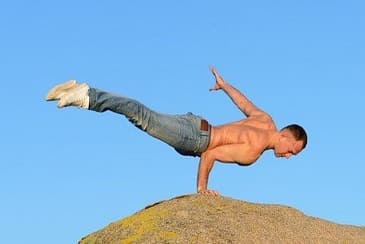
Source: Sergiy1975, Standard License, via Shutterstock
A martial artist might develop more two-sided skill by switching stances and sides when practicing skills. Developing favorite attacks so they work on the ‘weak’ side, not just the dominant side, gives you the power of surprise. Reflex drills such as ‘flow’ sparring, or ‘Dutch drills’ in kickboxing, may be used. These put you in a ‘real life’ fighting environment without the dire physical consequences, as your training partner will go at a low intensity, allowing you to develop timing, dexterity and reflexes before upping the intensity.
Becoming a Balanced Fighter
There are many components that go into building a complete martial artist. The good news is that with some proper guidance and appropriate training methods, anyone can make progress in these areas that will translate to better performance on the mats. Having the components of fitness as a cornerstone, will certainly help.
Optimal combat arts performance requires a balanced blend of various fitness components. By understanding and training these elements — strength, agility, endurance, coordination, speed, power, dexterity, and flexibility — you can elevate your performance and gain an edge in the competitive world of MMA.

Frequently Asked Questions
What are the Fitness Standards for MMA?
MMA fitness standards require superior endurance, agility, speed, and strength. An MMA athlete must be capable of enduring multiple rounds, while maintaining the power to deliver high-impact strikes and effective grappling to outlast opponents.
What Fitness Components are Needed for Fighting?
The critical fitness components needed for fighting include cardiovascular endurance for sustained effort and recovery between exchanges, muscular strength and power for delivering and resisting strikes, muscular endurance for long grappling exchanges, agility for quick footwork and evasive maneuvers, speed for swift strikes and reactions, and flexibility for a full, usable range of motion. Strength training also plays a big part in keeping fighters on the mats. Balancing these components equips fighters with the physical toolkit they need for a successful performance in the ring.
Which Fitness Component is Most Important in MMA?
While every component of fitness plays a significant role in MMA, cardiovascular endurance often stands out as the most critical. This endurance enables fighters to maintain a high level of performance throughout the duration of a fight, from the first round to the last. Despite the importance of power and strength for strikes and grapples, without the stamina provided by top-notch cardiovascular fitness, a fighter's effectiveness can rapidly dwindle as a match progresses.
What is the Difference Between Strength and Power in Martial Arts?
Strength is the maximum force you can produce, such as the heaviest weight you can lift. Power is how quickly you can apply that force: technically, force multiplied by velocity. A fighter can be very strong yet slow to deliver it, so a heavy squat does not guarantee a fast takedown or a hard punch. Build a base of strength with heavier lifting, then train power with lighter loads moved fast, such as jumps, throws and explosive pad work, progressing gradually.
Does Stretching Prevent Injuries in Combat Sports?
Not reliably on its own. Research reviews have found that stretching shows no clear benefit for preventing sports injuries, while strength training reduces them substantially. Flexibility still matters for performance, because high kicks, guard work and escaping bad positions all need usable range of motion. Build that range with controlled mobility work and pair it with strength training. Save long static holds for after training, because holding a stretch for over a minute right before explosive work can briefly reduce performance.
Featured Image Source: Tim_Iurii, Standard License, via Shutterstock
