Combat Arts Hamstring Injuries Overview
The hamstring muscle is not a single muscle or ‘string.’ It is a group of three muscles that run up the back of the thigh and allow the knee to bend. When an injury occurs to the hamstring, it means one or more muscles in this group have been pulled, torn, strained, ripped, overused or overloaded.
The hamstring muscles drive hip extension and knee flexion, help rotate the lower leg, and are vital to maintaining proper movement, gait, and balance. Most people associate all the muscles in the back of the thigh with the hamstring, however, anatomically, it is a very specific set of muscles. If you want to know more, the classic anatomical reference is Gray’s Anatomy.
Causes of Hamstring Injury
A hamstring injury usually happens during sparring, grappling, martial arts or fight events like UFC competitions, for example, with opponents doing extremely fast stops, starts, launching suddenly into motion from a low stance, high jumping double kicks, and striking the back of the leg close to the knee or hip.
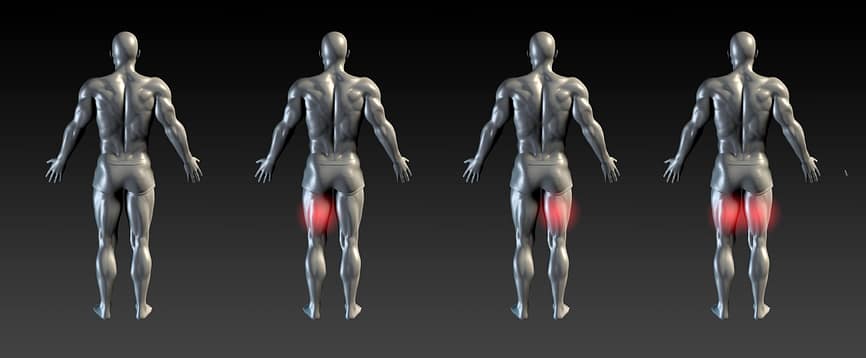
Hamstring injuries typically result from weak hamstrings, not warming up muscles completely before training, tight quadriceps muscles that pull on hamstrings, weak glute muscles that put too much pressure on hamstrings to bear weight, biomechanical problems such as coordination timing issues, fatigue, overwork, or a slippery training floor.
Source: kentoh, Standard License, via Shutterstock
Once the hamstring has been injured it tends to become weakened and easily reinjured. Reinjuring the hamstring is common. Improper technique during stances and movements can result in this injury.
Hamstring Injury Symptoms
Depending on the severity of the injury symptoms may be mild or severe. The hamstring is vitally important to physical movement. It is recommended that any discomfort in the hamstring be viewed as an injury and appropriate treatment administered.


Source: PAstudio, Standard License, via Shutterstock
Most common symptoms include:
Types of Hamstring Injuries
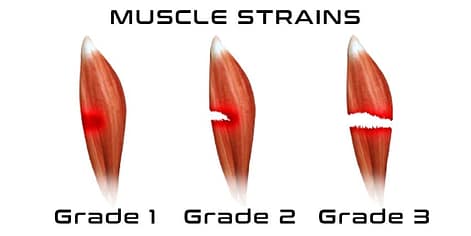
The hamstrings are strained, not sprained. A sprain is a ligament injury, and these are muscles. They may also develop hematomas or contusions after a direct blow. Hamstring injuries are graded on how much of the muscle fibre has been disrupted.
Is Rest, Ice, Compression, and Elevation the Best Home Treatment for a Hamstring Injury?
Do You Want to Learn More?
Related Injuries
Hamstring Injury
Symptoms
Causes
In fighters, plenty of variables affect the hamstrings: the flexibility of the muscles, an athlete’s weight, hip flexor and quadriceps flexibility, and hamstring strength. High-speed running and positions that take the hamstring to full stretch carry the most risk, and rapid acceleration and deceleration account for a lot of these injuries. Hard, high kicking can strain them too, particularly where there is a big strength imbalance between the legs.
Hamstring injuries occur because of their peculiar anatomic arrangement. Additionally, since they act over the knee and the hip joints with opposing effects on the muscle makes them vulnerable. They play a major role in deceleration and changing direction at high speeds. Since they bear the strain while transitioning from decelerating the extension of the knee to extending the hip joint, they are injured easily.
The hamstring injuries are graded as follows:
Grade 1: Mild pain or swelling, microscopic tearing of muscle fibres, no or minimal loss of function
Grade 2: Partial disruption of tissue, moderate pain, and swelling, loss of function.
Grade 3: Complete tear, severe pain, swelling, lack of function.
To learn how Hamstring Injuries are diagnosed Click Here.
Common Injuries
In our Common Injuries section, we discuss more the sprains, strains, and muscle contusions fighters experience.
Hamstring Injury Diagnosis
A hamstring strain is a clinical diagnosis, made from how the injury happened and what the examination shows. Imaging is not the starting point. It is used to grade a severe injury, to look for a tendon torn off the bone, and to guide surgical decisions. Most low-grade strains never need an MRI at all.
Injury Specific Diagnosis
Hamstring Injury
Physical Exam
The physical examination needs to be very thorough. It determines the location of the hamstring injury. The doctor will look for localized swelling in the posterior thigh. Any tenderness while palpating the thigh is significant. Induration in the posterior thigh along the hamstring muscle is indicative of injury.
For fighters who have a complete rupture, doctors may find a palpable defect within the hamstrings. The strength and range of motion are tested and compared with the healthy side.
During the exam, the fighter lies prone, and the hip is positioned at 0° of extension. Knee flexion is tested with resistance at the heel. Knee flexion is at 15°, and 90°. Pain or weakness is a positive sign. Hip flexion and knee extension is limited and is commonly seen in hamstring injury.


Source: Dmitry Kalinovsky, Standard License, via Shutterstock
Imaging
Plain radiographs are done to rule out a fracture. However, plains films will not show any injury to the muscle. Ultrasound and MRI are diagnostic. The injury is seen with edema and hemorrhage. An MRI can differentiate recurrent injury from any previous scarring.
Lab Tests
Blood tests are not required to diagnose a hamstring injury.
To learn how Hamstring Injury is treated Click Here
Common Diagnoses
Learn more about the various imaging modalities used to diagnose muscular injuries in our Common Diagnoses section.
Hamstring Injury Treatment
Treatment depends on the grade of the injury, and the real problem is re-injury: a hamstring that has torn once is far more likely to go again, especially in the first weeks back. Progressive loading, sensible warm-ups and refusing to rush the return are what keep that risk down.
Injury Specific Treatment
Hamstring Injury
Emergency Treatment
Stop all aggravating activities. Rest and ice the affected hamstring. Get it assessed the same day if you heard a pop, cannot bear weight, have heavy bruising high in the buttock, or have numbness or tingling running down the leg, because those point to a tendon pulled off the bone rather than a routine pull. Treatment from there depends on the grade of the tear.
Medical Treatment
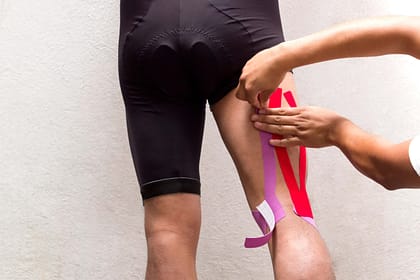
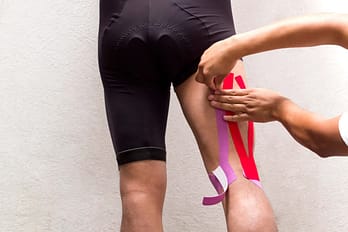
Grades I and II strains are treated with a short spell of relative rest and ice, then early protected movement and progressive loading under guidance. Immobilising the leg is out of date and works against you: it builds scar tissue and weakness, which is exactly the set-up for the next tear. Pain and inflammation are usually managed with a short course of NSAIDs — check with a doctor first if you have stomach, kidney or heart problems — and remember that dulling the pain makes it easy to do too much too soon. Crutches can help in the first days, but walking pain-free is nowhere near a green light for kicking or sprinting.
Source: Cris_mh, Standard License, via Shutterstock
For grade III injuries, surgery is generally considered when the tendons are avulsed off the bone with significant retraction, usually reported at around 2 cm or more, or when more than one tendon is involved. An isolated single-tendon avulsion with minimal retraction is usually managed without an operation. Where surgery is indicated, it is best done early rather than parked: a repair pushed into the chronic window is a harder operation with poorer results. Other treatments like ultrasound, therapeutic laser, electric stimulation, massage, and extracorporeal shock wave (ECSW) treatment get talked about, but there is little evidence they change the outcome.
Home Treatment
Use R.I.C.E. in the early days, then get the leg moving again under guidance. Healing time varies widely with the grade: a mild strain can settle in a few weeks, while a severe tear or a surgical repair takes many months. Have the injury reassessed rather than working off the calendar. It may be very mild and benefit from rest and time off from training until healed, or it may be a severe hamstring injury requiring surgery to repair and heal correctly.
Hamstrings can be made more resilient. Physical therapy and progressive strength training, with an emphasis on eccentric work, is the backbone of rehab and your best shot at cutting the re-injury rate, though nothing removes the risk and no stretching routine guarantees a hamstring will not go again. Return should be earned, not scheduled: full pain-free range, strength close to the uninjured side, a graded running and kicking build-up with no reaction the next day, and clearance from the clinician managing the injury.
Common Treatments
Learn how physical therapy, medications, surgery, and other approaches in our Common Treatments section are used to treat muscle sprains and contusions.