Combat Arts Head Injuries Overview
Combat arts is associated with repetitive head injuries and neurological consequences. For this reason, it is important to recognize a head injury.
Often a fighter or martial artist may seem normal or dazed. It’s tempting for a coach to sit them down and ask them to return when they’re feeling better. However, since the skull is an enclosed space, most symptoms of head injury are subtle and you must know them to identify an injury, some of which could be fatal.
Head Injury Causes
The rate and risk of head injury persist in combat arts. This is more common if the art form uses striking, using blocks, kicks, punches, knees, and elbows to defend oneself, grappling, is weapon-based, or uses low-impact moves that are oriented toward combat. The risk of taking a punch or blow to the head can cause injuries to the brain.
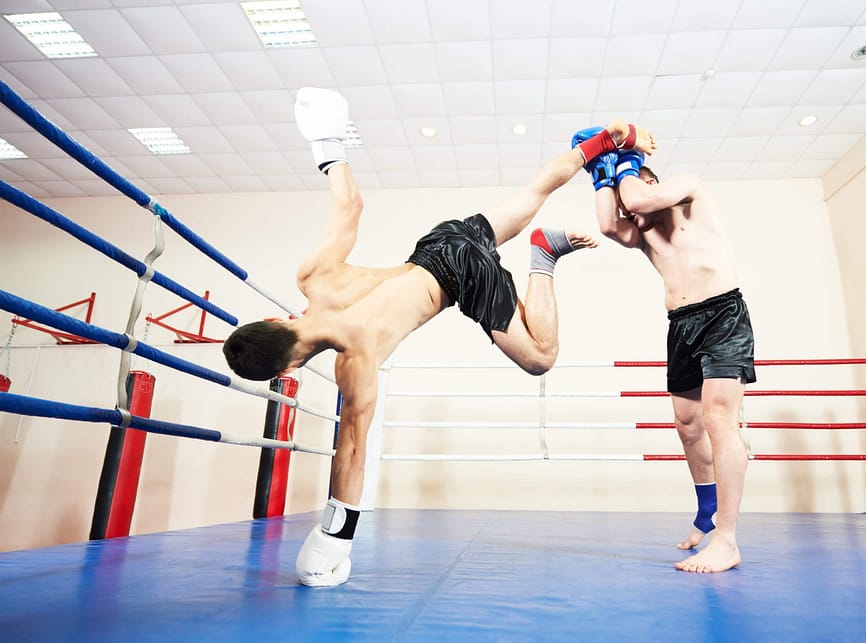
Source: Dmitry Kalinovsky, Standard License, via Shutterstock
Head Injury Symptoms
Depending on the location and nature of the injury, the symptoms will vary. Martial Artists will experience physical, cognitive, and behavioral changes like the following:
Physical Symptoms
Cognitive Symptoms
Behavioral Symptoms
Types of Head Injuries
Professional MMA fighter George “The Silencer” Sullivan talks about his head trauma gotten during an early fight. He didn’t know what hit him for a few weeks, but he had extreme confusion, continual vomiting, and severe vertigo until he figured out it was a concussion from head trauma and got treatment. Concussion is one type of injury that a martial artist can experience.
Let Us Give You a "Head Start" on Learning How to Treat & Prevent Head Injuries
Related Injuries
Martial arts that emphasize striking and throwing sometimes result in concussions. Symptoms can last from several minutes to weeks. Any athlete with symptoms of concussion should refrain from training or competition.
"Bulletproof” Got Hit.”
Even the most amazing fighters can get downed by concussion. David “Bulletproof” Mitchell is a Pro middleweight MMA Fighter who needed help recovering from symptoms developed through multiple concussions received during training and fights. By 2015 he had physical symptoms including extreme dizziness, vertigo, noise and light sensitivity, memory issues, along with emotional impacts such as anxiety, depression, easily overstimulated, and more from Post-Concussion Syndrome. Mitchell eventually sought treatment at a specialist concussion clinic. That is the lesson to take: when symptoms are still there weeks after a head knock, get assessed by a doctor who works with concussion instead of training through it.
Causes
A concussion occurs when the brain is severely jolted or made to impact the inside of the skull. The brain is protected from most injury by floating in cerebrospinal fluid. When a blow strikes the head or causes dramatic motion to the head, the force can be transferred through the skull and cerebrospinal fluid into the brain.
Examples include strikes or blows to the head (receiving a punch), whiplash, secondary injuries when striking an object (head bouncing off the floor during a leg sweep), or other motion that causes the body to suddenly move (throws).
Concussions may show up immediately or gradually. Most fighters recover within a week or two, but recovery times vary a lot from person to person and some take considerably longer. Symptoms that are still hanging around after a couple of weeks need a medical review.
Symptoms
A typical sign of a minor concussion is “seeing stars.”
Repeated blows to the head over a long career have been linked to a degenerative brain condition now called chronic traumatic encephalopathy (CTE), which older writing called the punch-drunk condition. It is associated with a build-up of tau protein in the brain, and it has been described alongside speech problems, extreme emotional swings, confusion, tremors, and slowed movement. The research is still developing, and CTE can only be confirmed after death, so no scan or test can tell a living fighter that they have it.
To learn how Concussion is diagnosed, click here.
How often Second Impact Syndrome happens in mixed martial arts is simply not known. Fighters who are “clocked” in the dojo are usually asked to “shake it off,” so incidents are rarely recorded or reported, and that under-reporting makes any rate you see impossible to trust.
Symptoms
Causes
SIS is a condition in which an individual experiences a second head injury before he or she has completely recovered from an initial head injury. It is uncommon, but the outcomes reported in the medical literature are severe — the published case series describe high rates of death and permanent disability. After the first head injury, there is a dysregulation of cerebral blood flow and it affects the release of neurotransmitters within the brain. The brain needs time to return to normal, and how long that takes varies from fighter to fighter, which is exactly why a clearance decision belongs to a doctor and not to the corner.
If a fighter returns too early and sustains a second head injury, SIS ensues, often within minutes of the impact.
To learn how SIS is diagnosed, click here.
Subdural and epidural hematomas are rare in mixed martial arts, but they are catastrophic when they do happen. The death of the mixed martial artist, Joao Carvalho underscores the dangers of bleeding within the skull. Subdural and epidural hematomas are insidious. Since the vessel bleeds into the space within the skull, the symptoms can build over hours and the damage is invisible from the outside. That is why a fighter who has taken a hard shot to the head should have a responsible adult with them overnight and go straight to an emergency department if any of the warning signs below appear. Waking the fighter every couple of hours through the night is no longer advised — it robs them of the sleep the injured brain needs.
An epidural hematoma (EDH) is a collection of blood between the inside of the skull and the outer brain covering called the dura. It happens when a vessel outside the brain and outside the dura is torn — classically the middle meningeal artery, which runs along the inside of the skull at the temple and is often torn by a fracture there. That is a different injury from bleeding inside the brain tissue itself.
A subdural hematoma is a collection of blood between the dura and the next layer of the brain covering the arachnoid. This also takes place due to the shearing of the blood vessels.
To learn how Hematomas are diagnosed, click here.
Cerebral contusions differ from concussions. While concussions are more diffuse brain injuries, a contusion is focal and affects a specific area of the brain.
Cerebral contusions are specific areas of bleeding on the brain surface. It can be defined as a bruise of the brain tissue. Contusions are most common in the frontal and temporal lobes where the brain is in closer proximity to the skull.
To learn how Cerebral Contusions are diagnosed, click here.
Common Head Injuries
Find out more about other types of common head injuries, visit our Common Injuries section.
Head Injury Diagnosis
All head injuries will require a thorough neurological examination to test brain function. This will include a sensory, motor, cognitive, and coordination exam. If the martial artist is having trouble breathing or has lost consciousness, call emergency services first and do not move them unless they are in danger. Nothing about an assessment should hold up the ambulance — checks happen alongside that call or on the way to hospital.
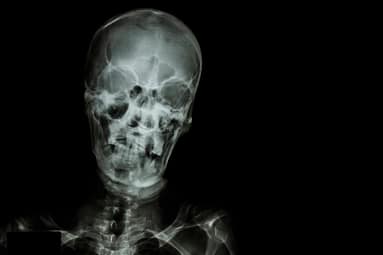
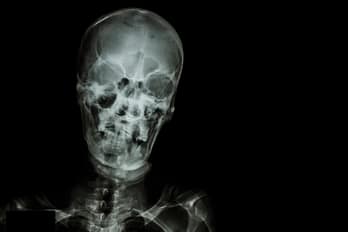
Source: Puwadol Jaturawutthichai, Standard License, via Shutterstock
Imaging is the mainstay of diagnosing location, size, and type of injury. Blood and urine tests may be performed to assess any physiological abnormalities that could worsen the injury.
Injury Specific Diagnosis
The damage created by a concussion can be hard to gauge. The best way to determine severity is by close observation. Severe impact creates a concussion by causing the brain to move around in the skull, or even impact against the bone, which can cause bleeding, bruising, damage to blood vessels, and injure nerves.
Physical Exam
The fighter who suspects a concussion needs to get checked right away. If the issue is mild, rest is required. However, if the concussion is severe, further problems can be avoided with the proper diagnosis. Severe concussions can be hard to catch. Brains have high plasticity, or ability to heal around injuries.
Negative changes may occur in the brain when this plasticity causes the brain to heal around and adapt to an injury, similarly to a tree growing around a rock. This can lead to maladaptive plasticity, or an incorrectly healed brain. If this happens then rehabilitation will be required and is likely to take longer than normal.
A few minutes of general observation for specific symptoms is always recommended when fighters fall, get thrown, knocked down, or slammed. The damage created by a concussion can be hard to gauge and may take several minutes to hours before symptoms emerge.
Imaging
It is not possible to image a concussion. MRIs and other special equipment can help ascertain additional damage, but specific symptoms are the primary diagnosis diagnostic tool.
Lab Tests
Researchers have been studying whether proteins released by injured nerve cells can be picked up in the blood after head trauma. The Professional Fighters Brain Health Study, whose lead investigator Charles Bernick, MD, of the Cleveland Clinic Lou Ruvo Center for Brain Health in Las Vegas is a member of the American Academy of Neurology, reported associations between markers of this kind and fighters’ exposure to head impacts. That work is still at the research stage. There is no blood test that diagnoses a concussion or proves repetitive head trauma in an individual fighter, which is consistent with what the imaging section above says — symptoms remain the primary diagnostic tool.
To learn how a Concussion is treated, click here.
Physical Exam
If SIS is suspected, a simple neurological exam is performed to check for orientation, concentration, retrograde amnesia, memory or recall, vision, and coordination. Ask the fighter the following questions:
- Name city, opponent, day, month, and year.
- Repeat five words in the correct order.
- Recall events before the injury like what did you eat for breakfast
- Repeat the same five words in correct order after 5 minutes
- Ask them to count your fingers and check if the pupils are the same size
- Stand on one foot to assess balance.
Abnormalities in any of the above necessitate further assessment at a hospital.
Imaging
CT is the preferred modality for identifying head trauma. However, the neurological examination is the key to determining the progress of the injury. The CT scan will be reviewed for intraparenchymal, intraventricular or subarachnoid bleeding, brain swelling, and a midline shift.
Lab Tests
There are none specific to SIS. However, doctors may require blood samples to study the oxygenation levels of the blood, inflammatory markers, and clotting time.
To learn how SIS is treated, click here.
Physical Exam
Assessment of neurologic status using the Glasgow Coma Scale (GCS) is paramount for hematomas. The initial neurologic examination forms a baseline as doctors follow the fighter's clinical course. Examination and monitoring of pupil size are also important.
Imaging
CT and MRI are sensitive to check for bleeding between the different layers of the dura and arachnoid. Repeated images may be obtained to determine the size of the bleed and its progress. Epidural hematomas increase rapidly and need treatment right away. A CT angiography may also be advised to study the blood vessels in the brain.
Lab Tests
Blood tests to check the bleeding time and clotting time will be done.
To learn how Hematomas are treated, click here.
Physical Exam
A quick neurological examination must be performed to test all executive, cognitive, motor, and coordination functions. Small contusions may show no effects at all, while large bruises may cause focal changes and neurological deficits on one side of the body.
Imaging
CT scan is the most accurate and rapid imaging for cerebral contusion as is the case with all intracranial injuries.
Lab Tests
Blood tests may be done to test the bleeding time and clotting time. However, if no changes are observed on the CT, then the blood tests may be deferred.
To learn how Cerebral Contusions are treated, click here.
Diagnoses of Common Head Injuries
Learn more about other types of head injuries diagnoses visit our Common Diagnoses page.
Head Injury Treatment
In general, head injuries require rest and a spell away from training. Bleeds inside the skull are a different matter — some have to be evacuated surgically, and that call belongs to a neurosurgeon working from a scan.
Head injuries progress quickly and require immediate medical attention. Even following surgery, the brain needs time and energy to recuperate. Even activities like reading can strain the brain. For this reason, there are specific “return to play” guidelines for mixed martial artists following head injuries.
Injury Specific Treatment
Emergency Treatment
Do not move the injured person. Immediately call emergency services if showing any symptoms. A concussion may cause brain damage even though it did not seem like the injured person hit their head very hard and it did not appear very traumatic. The person may not even lose consciousness. But, if the head gets hit with the right amount of force in the correct place, there is potential for injury and swelling in the brain and acute injury.
Medical Treatment
There’s no specific medical treatment for concussions. Medications may be prescribed for headaches, pain, nausea, and vomiting. Rest and refraining from exertion are usually advised. A fighter with a suspected concussion is finished for that day — no return to sparring or competition in the same session — and should be checked by a doctor before going back to training.
Home Treatment
At home, it is advised that the fighter take short naps of 30-60 minutes. Avoid activities where the head experiences jerky or whiplash movements.
For the first day or two, go easy physically and mentally — cut back on screens, reading, and anything that makes the symptoms worse. After that, build the load back up gradually, staying under the level that brings symptoms on rather than shutting the brain down completely. Driving is not permitted while symptoms last. An adult should stay with the fighter on the first night and watch for a worsening headache, repeated vomiting, seizures, confusion, weakness or numbness, or difficulty waking, and get emergency help straight away if any of those appear. Be cautious with painkillers, since aspirin and other anti-inflammatories increase bleeding time — ask a doctor which one is safe after a head injury.
Emergency Treatment
If the fighter has lost consciousness or the neurological examination is showing deficits of any kind, the fighter needs to be transported to a hospital immediately.
Medical Treatment
There’s only symptomatic treatment for second impact syndrome to prevent any further deterioration of neurological function. No specific treatment is prescribed except to allow the brain to rest. If the respiratory function is compromised, then pulmonary support is provided through a ventilator.
Hospital Care
Second impact syndrome is managed in hospital, often in intensive care, and there is no home-treatment pathway for it. The medical team monitors for worsening headaches, somnolence or confusion, tonic-clonic seizures, visual disturbances, vomiting, urinary or bowel incontinence, weakness, numbness, and paralysis. Overnight observation at home — an adult staying with the fighter and watching for those same warning signs — is what a suspected mild concussion needs, and that is covered in the concussion section above.
Emergency Treatment
For epidural hematomas, doctors will recommend a surgical evacuation, since it progresses quickly causing the brain to swell and shift. The hematomas grow rapidly thereby compressing the brain. So, doctors will remove a piece of the skull during a craniotomy and drain the blood accumulating between the meninges. Whether a particular bleed is operated on depends on its volume and thickness, whether the brain has been pushed off the midline, and the fighter’s conscious level. That is a neurosurgical judgement made on a scan — never something a fighter or a coach can size up and decide to sit out.
Medical Treatment
To decrease brain swelling, osmotic agents such as mannitol are used. Mannitol lowers the pressure inside the skull as a whole — intracranial pressure — rather than acting on one compartment. Older trials of high-dose mannitol in traumatic intracranial bleeding reported better outcomes, but those results have since been questioned and the practice is not settled.
Home Treatment
Bed rest and observation are advised for those with smaller hematomas. Fighters with hematomas are at greater risk for seizures and so should be monitored. Alcohol is prohibited as it also is one of the causes of non-traumatic subdural hematomas. Blood thinners — aspirin, clopidogrel, heparin, warfarin and the like — make a bleed more likely to grow, so tell the treating doctor everything you take. If any of them were prescribed to you, never stop them on your own; that decision belongs to the doctor who prescribed them.
Emergency Treatment
The most important aspect of treating cerebral contusions is controlling bleeding within the brain if any. Most contusions do not require surgery. If there is any bleeding, it will need to be surgically removed.
Medical Treatment
Intracranial pressure is usually monitored and controlled through hydration and diuretics. Any pain will be controlled with select pain medications.
Home Treatment
If there is a visible bruise on the head, it can be iced. Rest and gradual resumption of activities are advised until neurological symptoms are completely resolved.
Common Treatments
Learn more about other types of head injury treatments, visit our Common Treatments page.