Combat Arts Abdomen Injuries Overview
Most body shots hurt for a moment and pass. A few do not, and the abdomen is the one part of the body where a serious injury can start quietly. The pain can be mild at first, and the person may not notice it.
This guide covers what a body shot does, what a liver shot is, which signs mean an emergency, how each organ gets hurt, and when it is safe to train and spar again.
At a glance
What Happens When You Take a Body Shot?
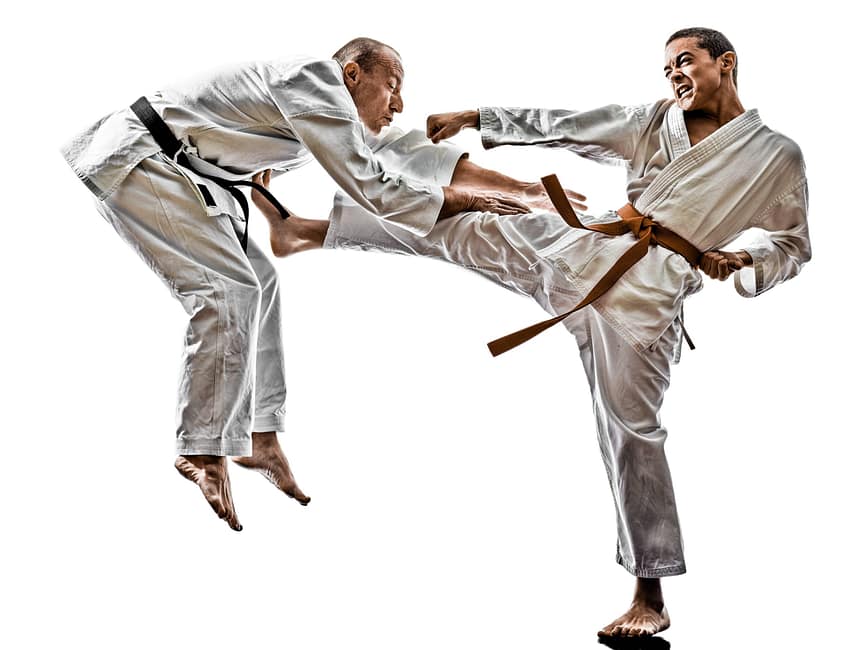
The abdomen is vulnerable because it has no bones to protect it. Under layers of muscle and soft tissue, major organs and blood vessels lie close to the surface. It takes punches, kicks and knees, and it gets hurt in falls and slams.
Source: OSTILL is Franck Camhi, Standard License, via Shutterstock
Getting the Wind Knocked Out of You
A blow to the upper belly compresses the nerves behind the stomach, called the solar plexus, and sends the diaphragm into spasm. The diaphragm is the muscle that makes you breathe, so for a moment you cannot take a full breath.
It is frightening but brief. Sit or crouch forward, stay calm and take slow, deep breaths. The symptoms usually pass within 10 to 15 minutes. If they do not, get medical help, because a broken rib or a collapsed lung can look the same at first.
What Is a Liver Shot?
The liver is a large organ on the right side of the body. It is vulnerable because part of it sits below the rib cage. A liver shot, or liver punch, is a punch, kick or knee aimed at that spot.
Oscar De La Hoya found out what one does in September 2004. Bernard Hopkins landed two left hooks "just below De La Hoya's rib cage" in the ninth round, and De La Hoya was stopped for the first time in his career. He called it "a well-placed body shot."
The usual explanation is a reflex. The blow stretches the capsule around the liver, which is rich in nerves. The nervous system responds by widening the blood vessels and slowing the heart, so blood pressure drops suddenly. The fighter folds, fully conscious and unable to stand. The effect usually passes within minutes.
A liver shot that drops you is not the same thing as a liver injury. A real injury causes pain and tenderness in the abdomen that sometimes spreads to the right shoulder, and it gets worse instead of better.
Can a Punch or Kick to the Stomach Cause Internal Bleeding?
Yes, although it is rare. Doctors group abdominal injuries into blunt and penetrating, and blunt trauma includes a direct blow such as a kick. The spleen and the liver are the two organs most often injured this way.
Sport accounts for up to 10 percent of all abdominal injuries. The same review calls spleen and liver injuries in athletes rare, but potentially life-threatening if they are not diagnosed in time.
One case comes straight from a martial arts class. A 21-year-old man went to the emergency department with belly pain and rectal bleeding shortly after being kicked in the stomach at jujitsu. The kick had cut off the blood supply to part of his colon for a time. He recovered without surgery.
Abdominal Injury Symptoms: When Is It an Emergency?
The first check-up can miss it. Half of athletes with a significant abdominal injury have a normal first examination. What matters is what happens over the next hours.
Call emergency services, or go straight to an emergency room, if someone who has taken a body shot or a hard fall has any of these:
Shoulder pain is the one fighters miss. Blood inside the abdomen irritates the diaphragm, and the pain is felt at the shoulder.
While you wait for help, stop the session and keep the fighter still, sitting or lying comfortably. Give no food and no drink, in case surgery is needed. Give no painkillers either. They mask the only warning sign you have, and anti-inflammatory drugs can make bleeding worse.
This page is general information. It does not replace an examination by a doctor.
Strong Abdominals Are a Sign of a Strong Combat Athlete
Improve Your Muscle Strength With Us!
Which Organ Is Hurt?
Organ | Where It Hurts | Warning Signs | Typical Cause |
|---|---|---|---|
Liver | The upper right belly, sometimes the right shoulder | Pain that worsens, lightheadedness, pale clammy skin | A direct blow under the right ribs, or a sudden stop such as a slam |
Spleen | The upper left belly below the ribs, sometimes the left shoulder | The same signs of blood loss. It can bleed days or weeks later. | A blow to the upper left belly or the lower left ribs |
Kidney | The flank and the back | Blood in the urine | A blow to the flank or back |
Bowel and stomach | The belly. The pain can be slight at first and worsen steadily. | Vomiting, fever, blood from the rectum | A kick, knee or punch to the belly |
Abdominal wall | The muscle itself. It hurts more when you cough, sneeze or sit up. | A lump or bulge, or a swelling that keeps growing | Sudden twisting, overuse or a direct blow |
Liver Injuries
The liver is injured by direct blows and by deceleration, which is a sudden stop. In a sudden stop, the liver keeps moving while the body does not, and the thin capsule around it can tear.
Some liver injuries heal without treatment, but the person is kept in hospital and watched closely to make sure the bleeding does not get worse. If it continues, doctors can often seal the bleeding vessel through a thin tube passed up from the groin. Surgery is needed when that fails or when bleeding is severe from the start.
Spleen Injuries
The spleen sits under the lower left ribs. A severe blow to the stomach area can damage it, and so can a broken rib on the left side. When left-sided ribs are fractured, doctors watch closely for a spleen injury. See our guide to rib injuries.
Two things about the spleen matter to fighters:
Most small and moderate spleen injuries heal without surgery. If the spleen has to be removed, you will need vaccinations and other precautions against infection for life.
Kidney Injuries
The kidneys sit high in the back, on either side of the spine. The signs of a kidney injury are blood in the urine and severe flank and back pain. Treatment is usually bed rest for one to two weeks, or until the bleeding has reduced. Go to an emergency room if you are passing much less urine than normal after a kidney injury.
Under the Unified Rules of MMA, strikes to the kidney area are not specifically banned. Some amateur and regional rule sets are stricter, so know the rules you compete under.
Blows are not the only threat to a fighter's kidneys. Brian Melancon retired from the UFC at 31 after his kidney function dropped to 47 percent. His specialist advised him that continuing to train, fight and cut weight risked permanent damage. See our guides to hydration and dehydration.
If you have only one working kidney, talk with your doctor about the specific sport and ways to lessen the risk before you take up a contact sport.
Bowel and Stomach Injuries
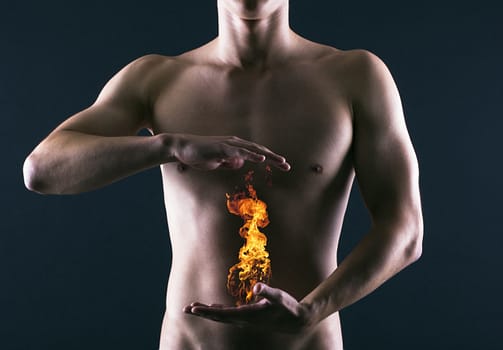
These are the injuries that hide. Pain from a tear in the small intestine is minimal at first but worsens steadily. Vomiting, fever and blood from the rectum are the other warnings.
Not every abdominal emergency in a fighter comes from a blow. UFC middleweight champion Robert Whittaker was pulled from his title defense at UFC 234 in February 2019, hours before the fight. "I had a collapsed bowel and an internal hernia that was causing me all sorts of problems," he said after emergency surgery. Doctors had told him he could lose part of his bowel, or die, without it.
Brock Lesnar's problem was a disease, not an injury. He had diverticulitis, a condition of the colon, and in May 2011 surgeons removed part of his colon.
Source: Refat Mamutov, Standard License, via Shutterstock
Both cases make the same point. Severe or worsening belly pain needs a doctor, whether or not you remember being hit.
Abdominal Wall: Strains, Hematomas and Hernias
The most common abdominal injury in any gym is the least dangerous. An abdominal muscle strain, or pulled stomach muscle, happens when the muscle is torn or overstretched by repeated movement, a sudden twist, heavy lifting or intense exercise.
It hurts when you cough, sneeze, laugh, sprint or get up after sitting. There may be bruising, swelling, spasm and stiffness. It heals with rest. Ice and warm compresses, an abdominal brace and physical therapy all help. Do not take anti-inflammatory painkillers after a blow to the belly until a doctor has ruled out an internal injury.
A hernia is different. A hernia is an organ pushing through a weak spot in the muscle. It causes a visible lump or bulge, it can cause nausea and vomiting, and it needs treatment. Our article on sports hernias covers the groin injury that fighters often confuse with it.
A hard blow can also make the muscle bleed inside its sheath. Doctors call this a rectus sheath hematoma. Get seen the same day for a blow that leaves a growing lump, severe pain or any dizziness, because these can bleed more than you would expect. Most are treated without surgery.
How Are Abdominal Injuries Diagnosed?
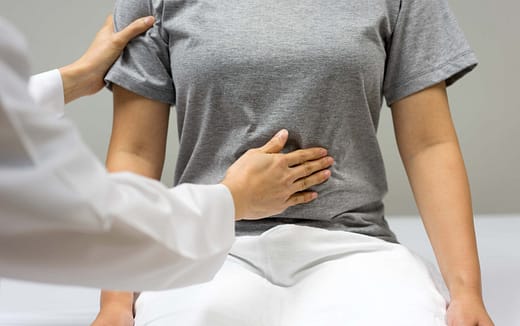
Because the first examination can be normal, doctors often keep the person under observation and examine them again.

Source: nuiza11, Standard License, via Shutterstock
Our Common Diagnoses section explains the tests used across combat-sport injuries.
How Are Abdominal Injuries Treated?
Treatment is either observation with close monitoring, or surgery to stop the bleeding and repair the organ. A third option is to block the bleeding vessel from the inside, without open surgery.
For an athlete whose pulse and blood pressure are stable, treatment without surgery is recommended for blunt spleen and liver injuries, whatever the grade of the injury. That still means a hospital stay.
The Common Treatments section explains the therapies used in recovery.
When Can You Train and Spar Again?
There are no evidence-based guidelines on how long to rest after a liver or spleen injury. The review that says so advises light activity for the first three months, then a gradual return to unrestricted activity as tolerated. For mild injuries, many of the specialists it surveyed allowed full activity sooner.
So the decision belongs to the doctor treating you. Because an injured spleen can rupture late, plan in months, not weeks.
For a pulled stomach muscle, the test is simpler. You are ready to go back when you can cough, sit up and twist without pain.
Whatever the injury, bring body contact back last. Start with cardio and technique. Add pad work and drilling with no body shots. Body sparring, knees to the body and heavy top pressure come at the end.
How to Protect Your Abdomen


Source: Serhii Bobyk, Standard License, via Shutterstock
Our guide to injury prevention covers the basics. For cuts and blunt-force injuries to the abdomen, see the Common Injuries section, and for blows higher up, our guide to chest injuries.
Featured Image Source: CLIPAREA l Custom media, Standard License, via Shutterstock