Rib Injuries in Martial Arts
Yes, a punch, kick or knee can break a rib. So can a body triangle, a hard scramble or a training partner landing on you. Rib injuries are among the most painful injuries in combat sports because you cannot rest a rib: it moves every time you breathe.
There are three kinds. A rib can be bruised, it can be broken, or the cartilage that joins it to the breastbone can be damaged, which fighters often call a popped rib. They feel alike and heal at different speeds, and a few of them are emergencies. This guide covers how to tell them apart, what to do in the first days, and when it is safe to train and spar again.
At a glance
Can a Punch or Kick Break a Rib?
Yes. A punch, kick or knee aimed at the body can fracture a rib, and strikes that target the ribs are legal in MMA. Ribs 4 to 10 are the most vulnerable in a fight. A rib that has been broken before, or has had its cartilage damaged, is more likely to break again.

Source: antoniodiaz, Standard License, via Shutterstock
Jose Aldo is the best-known example. In June 2015 he took a kick to the body in training, less than three weeks before his title defense against Conor McGregor at UFC 189, and had to withdraw. His coach said Brazilian doctors had diagnosed a fractured rib. The UFC said it was "a rib contusion and damaged cartilage." The argument shows how hard these three injuries are to tell apart, even for a world champion with access to scans.
Leonardo Santos also fractured a rib in training in 2019 and had to wait for medical clearance before he could return to the UFC.
It is Not Only Strikes: Grappling and Rib Injuries
Grappling is hard on the ribs. In BJJ and wrestling, the tackling, pushing, twisting, lifting and arching all load the rib cage.
Anthony Pettis found that out against Dustin Poirier in November 2017. Poirier took full mount with a body triangle, with his legs high on Pettis's ribs, and Pettis tapped in the third round with a fractured rib.
The data points the same way. The UFC Performance Institute recorded 1,344 fighter injuries between 2017 and 2020. Among the injuries caused by grappling, bruised ribs made up about 10 percent, and sprains of the joints where the ribs meet the breastbone made up another 10 percent. Neither appears among the most common injuries from striking. In training, grappling caused more injuries than any other activity.
Bruised, Broken or Popped? The Three Rib Injuries
All three cause strong pain when you breathe in or cough, with swelling, tenderness and sometimes bruising. A break can come with a cracking sensation.
Injury | What it is | Shows on X-ray? | Typical healing |
|---|---|---|---|
Bruised rib | A bruise to the chest wall and the muscles between the ribs | No | 2 to 6 weeks |
Broken rib | A crack or break in the bone | Sometimes. Many are missed. | At least 6 weeks |
Cartilage injury ("popped rib") | A tear or break in the cartilage that joins the rib to the breastbone | Almost never | 2 weeks to several months |
The symptoms come from the NHS guidance on broken or bruised ribs. Because the three feel so similar, pain alone cannot tell you which one you have.
Cartilage injuries deserve more attention than they get. The cartilage acts as a shock absorber for the front of the chest, and injuries to it are probably more common than doctors have believed, because standard imaging does not show them. Cartilage also heals more slowly than bone.


Source: EfteskiStudio, Standard License, via Shutterstock
Ribs can also be hurt without a single big blow. Repeated movement can cause stress injuries that build up over time. For other chest wall injuries, such as hematomas, see our guide to chest injuries.
When is a Rib Injury an Emergency?
A rib protects the lung beneath it, and the lowest ribs sit over the liver and the spleen. A fracture of the lower ribs can damage either organ.
Call emergency services if someone with a rib injury has any of these:
One more sign needs an ambulance. If a section of the chest wall moves in the opposite direction to the rest of the chest when the person breathes, several ribs are broken in more than one place. Doctors call this a flail chest.
While you wait, keep the fighter sitting up and still. If you are the one hurt, stop. A broken rib that gets worked through can shift and tear a lung.
Problems can also appear days later. See a doctor if you develop a fever, a cough that brings up mucus, or shortness of breath. Delayed bleeding into the chest, a collapsed lung and pneumonia are all recognized complications of rib fractures.
This page is general information. It does not replace an examination by a doctor.
Rib Injuries Are Painful and Can Take Months to Heal
Let Us Teach You How to Manage the Recovery!
How are Rib Injuries Diagnosed?
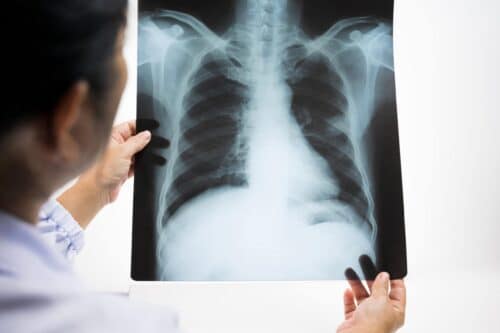
Most simple rib fractures are diagnosed by examination: where it hurts, how you are breathing, and whether the chest wall is tender or moves abnormally. Imaging is mainly used to check the lungs and organs underneath.

Source: Komsan Loonprom, Standard License, via Shutterstock
Two professional football players show the pattern. Both had normal X-rays after a hit to the ribs. A CT scan then found cartilage fractures in both.
So if your X-ray is clear and you still cannot breathe deeply or twist without sharp pain, go back. Our Common Diagnoses section explains the tests used across combat-sport injuries.
Rib Injury Treatment: The First Days
Ribs cannot easily be splinted or supported like other bones, so they are left to heal on their own. Your job is to control the pain well enough to keep breathing properly.
In hospital, severe pain can be treated with a nerve block between the ribs. A collapsed lung or bleeding into the chest is treated with a chest tube. Surgery is uncommon. It is considered for a flail segment, badly displaced fractures, or a rib that does not heal.
Should You Tape Broken Ribs?
No. Fighters used to tape their ribs and keep training. Doctors no longer use chest binders or bandages, because they keep the ribs from moving when you breathe or cough, and that can lead to a lung infection.
How Long Do Rib Injuries Take to Heal?
Professional athletes sometimes return sooner. The two football players with cartilage fractures were back in two to four weeks, wearing protective padding and under the care of team doctors. Neither felt normal until six to eight weeks. That is a best case with full-time medical support, not a target for a gym.
When Can You Train and Spar Again?
Going back to contact is your doctor's decision, not the calendar's. Three things come first:
Returning too early risks greater damage and a longer recovery. A rib that is still healing can shift if a partner lands on it.
Build back in order. Start with cardio and solo technique. Add pad work and drilling with no body contact. Add light grappling next. Body shots, heavy top pressure and body triangles come last.
How to Protect Your Ribs


Source: MaryAbramkina, Standard License, via Shutterstock
For bruises and hematomas of the chest wall, see our Common Injuries section. For the therapies used in recovery, see Common Treatments.

Frequently Asked Questions
Can a Punch or Kick Break a Rib?
Yes. A punch, kick, or knee aimed at the stomach from a sparring partner can cause a rib to fracture, and moves that specifically target the ribs are legal in MMA. Ribs 4 to 10 are most vulnerable to breakage during a fight. Ribs that have previously been fractured or had cartilage broken are more vulnerable to repeat fractures.
When is a Rib Injury an Emergency?
Stop at once if you are the one hurt. A broken rib that gets worked through can shift and tear a lung. Call emergency services if the fighter cannot get a breath in, breathlessness keeps getting worse, they cough up blood, part of the chest wall sucks in when they breathe, or they turn pale, clammy or faint. Belly pain or pain at the tip of the shoulder is also urgent, because a low rib fracture can tear the liver or the spleen underneath. Keep them sitting up and still.
How are Rib Fractures Diagnosed?
Isolated rib fractures are mostly diagnosed via a clinical exam. However, to rule out injuries to other thoracic structures, imaging is necessary. The best test is the Chest CT, which can detect trauma to the internal organs as well.
Should You Tape Broken Ribs and Keep Training?
No. Doctors no longer use chest binders or bandages, because they keep the ribs from moving when you breathe or cough, and that can lead to a lung infection. The ribs need time to heal, and a sudden tackle or an opponent landing on top of you could displace the fractured rib and puncture the internal organs. Pushing on also delays healing.
How Long Does a Broken Rib Take to Heal?
Rib fractures usually take six weeks to three months to heal, and the ache can outlast the bone. Cartilage injuries can take from two weeks to several months. Going back to contact is the treating doctor's call, not the calendar's. Deep breathing and coughing without pain, full pain-free movement, and no tenderness over the fracture come first, and the heavy impacts come last.
Featured Image Source: CLIPAREA, Standard License, via Shutterstock