The journey of self-improvement and physical wellness doesn't end with age—it transforms. As we enter our golden years, martial arts can become powerful tools for maintaining health, independence, and confidence.
I've practiced and taught Aikido for decades. In that time, I've watched countless seniors discover the joy of martial arts training, often with impressive results. Martial arts build focused movement, good breathing, and mindful awareness. Together, these can help with many of the challenges that come with aging.
Many older adults mistakenly believe martial arts are exclusively for the young or worry about injury. In fact, several martial arts traditions work with the aging body, not against it. They adapt to natural changes in strength, flexibility, and reaction time.
In this guide, I'll walk you through the most senior-friendly martial arts and explain their benefits. I'll also share practical advice for getting started, whatever your current fitness level or experience.
Why Martial Arts Are Great for Seniors
The benefits of martial arts training for seniors extend far beyond what most people initially imagine. When I began teaching Aikido to older adults, one thing became clear. Martial arts offer a rare mix of physical, mental, and social benefits.
From a physical perspective, martial arts provide a comprehensive full-body workout that can be tailored to individual capabilities. Unlike many exercise programs, martial arts train balance, coordination, strength, and flexibility at the same time. As a result, practice mimics the complex movements you need for everyday life.
❝
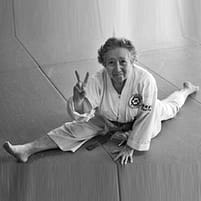
Age is Only a Number...
A grandmother, known as the lollipop lady and ju-jitsu expert, is often referred to as Britain's oldest and most famous ju-jitsu practitioner. She holds a 7th dan black belt in Spirit Combat International ju-jitsu and is known for her dedication to the martial art. BBC News reported on her role as a lollipop lady outside Fairhaven Primary School in South Walsham, where she had been working for 27 years. She was also selected to carry the Olympic torch in 2012.
Ena Mallett
What truly sets martial arts apart is the emphasis on proprioception—your body's awareness of its position in space. As we age, this sense naturally diminishes, contributing to falls and mobility challenges. Regular practice can sharpen proprioceptive awareness. In turn, that supports better balance and more confident movement.
Beyond the physical realm, martial arts offer powerful cognitive benefits. Learning new movement patterns, memorizing forms, and developing strategic thinking create what neurologists call "cognitive reserve"—essentially a buffer against age-related cognitive decline.
Perhaps most importantly, martial arts create community. In my dojo, I've watched seniors form deep friendships based on shared experience and mutual respect. Many older adults face social isolation after retirement or the loss of a partner. For them, the dojo can become a second home, a place where people value their wisdom and experience.
Factors to Consider When Choosing a Martial Art as a Senior
Selecting the right martial art requires thoughtful consideration of several key factors. The ideal practice will align with your physical capabilities, personal goals, and temperament.
Low-Impact vs. High-Impact Training (What's Safest?)
Low-impact practices like Tai Chi, Aikido, and some forms of Kung Fu go easy on the joints. At the same time, they still build strength and coordination. These arts emphasize fluid movements, proper body alignment, and efficient use of energy rather than explosive power.
High-impact martial arts like traditional Karate, Taekwondo, or Boxing incorporate more jumping, striking, and rapid direction changes. While these can be modified for seniors, they inherently place more stress on the joints.
In my experience teaching older adults, starting with low-impact training provides the safest foundation. Many of my senior Aikido students began with our gentlest practice before gradually incorporating more dynamic elements.
Mobility and Joint Health (Finding a Style That Promotes Flexibility)
Internal Chinese martial arts like Tai Chi and Ba Gua Zhang excel at promoting gentle improvement in range of motion. Their circular movements help move synovial fluid within the joints and strengthen the surrounding soft tissues. That makes them excellent choices for people with arthritis or joint stiffness.
Arts like Aikido and BJJ require greater mobility but also build it over time. The regular practice of controlled falling and rolling in Aikido maintains hip and shoulder mobility that many seniors otherwise lose.
If you have significant mobility limits, several martial arts offer seated versions. That way, you still benefit from upper-body movement and breathing techniques when standing practice isn't possible.
Self-Defense vs. Fitness (Choosing a Goal)
If practical self-defense tops your list, consider Wing Chun, modified Krav Maga, or certain Japanese Jiu-Jitsu styles. Their techniques rely on leverage and body position rather than strength or speed.
For those primarily seeking fitness benefits, arts with flowing forms like Tai Chi provide excellent cardiovascular conditioning while building balance and coordination. These practices can be scaled to any fitness level while offering measurable improvements in health markers.
Many seniors I've worked with initially come seeking one benefit only to discover others along the way. One lady joined our Aikido program strictly for physical fitness but found the self-defense applications renewed her confidence when walking alone at night.
Group Classes vs. Solo Training (Social Benefits of Martial Arts)
Group classes offer regular social interaction, accountability, and motivation from shared experience. Many seniors find the camaraderie of group training as valuable as the physical practice itself.
On the other hand, solo arts like some forms of Tai Chi give you a more flexible schedule. You can practice them anywhere, with no special equipment or partner.
The ideal approach often combines elements of both. Many of my senior students practice solo forms at home between group classes, benefiting from consistent training and regular social interaction.
Best Martial Arts for Seniors
After decades in the martial arts world and specifically teaching older adults, I've identified several disciplines that offer exceptional benefits for seniors.
Tai Chi – The Gentle Art of Movement
Tai Chi stands as perhaps the most universally accessible martial art for seniors. This ancient Chinese practice combines slow, flowing movements, deep breathing, and mental focus. Together, they offer real benefits with minimal injury risk.
Tai Chi's emphasis on weight shifting and single-leg balance within a controlled framework makes it particularly valuable. These elements directly translate to improved stability in daily activities and reduced fall risk. Research shows that regular Tai Chi practice significantly improves balance metrics in older adults. A 2023 meta-analysis of 24 trials found it cut the risk of falling by about a quarter.
The meditative aspect of Tai Chi also provides powerful stress reduction benefits. Practitioners often call this mix of focused breathing and mindful movement "moving meditation." It may also help lower stress hormones and blood pressure.
Tai Chi also has practical self-defense applications beneath its flowing surface. However, how much a school emphasizes them varies.
Aikido – Using Energy to Defend Yourself
As an Aikido instructor, I've worked with many senior students. I've seen how this Japanese martial art can change the way older adults relate to their bodies.
Aikido's core philosophy centers on blending with an opponent's energy rather than meeting force with force. This principle suits seniors, as techniques rely on proper positioning and timing rather than muscular strength.
The rolling and falling techniques taught in Aikido provide unique benefits for seniors. These skills can feel intimidating at first. However, we teach them step by step, and over time they build what I call "fall-proofing"—the ability to take an unexpected fall safely. For example, one of my senior students slipped on ice. Thanks to her Aikido falling skills, she turned what could have been a serious injury into a controlled roll.
Beyond physical techniques, Aikido cultivates a mindset of peaceful resolution. This philosophical dimension adds depth to the practice beyond mere physical exercise.
Judo – Gentle Yet Effective Throws
Despite its reputation for dynamic throws, Judo—literally "the gentle way"—offers modified training approaches beneficial for seniors when taught appropriately. Judo's founder, Jigoro Kano, designed the art to maximize efficiency while minimizing harm.
Modified Judo for seniors typically emphasizes the art's ne-waza (ground techniques) over the more athletically demanding throwing techniques. These ground-based skills focus on controlling position and leverage, building core strength and body awareness without high-impact falls.
The concept of "maximum efficiency with minimum effort" makes Judo techniques accessible even as strength diminishes with age. Advanced practitioners demonstrate this principle beautifully—watch 10th-dan Judo master Kyuzo Mifune in his seventies effortlessly controlling much younger, stronger opponents through perfect timing and technique.
Many dojos now offer "Gentle Judo" programs for older adults. These classes focus on safe falling, ground mobility, and simplified throws with sensible safety changes.
Karate – Traditional Strength and Discipline
Traditional Karate contains numerous elements ideal for senior practitioners when approached appropriately. The structured progression, emphasis on proper form, and adaptability of techniques make certain Karate styles accessible well into older age.

Among Karate styles, Goju-Ryu and Shito-Ryu often work best for seniors. That's because both balance soft and hard techniques.
The kata (forms) practice provides a comprehensive, low-impact workout that can be modified for various physical limitations.
For seniors, the breathing practices within traditional Karate offer particularly valuable benefits. The synchronized breathing patterns enhance lung capacity and oxygen utilization—often countering the natural decline in respiratory efficiency that comes with aging.
Modified training approaches for seniors typically reduce impact in striking techniques, emphasize precision over power, and adapt stances for appropriate joint stress. Many dojos now offer "Senior Karate" programs specifically designed with these modifications.
Brazilian Jiu-Jitsu (BJJ) – Ground-Based Self-Defense
When properly modified, BJJ offers unique benefits unavailable in other disciplines. The "gentle art" focuses on ground-based control using leverage and technique rather than strength—principles that serve seniors particularly well.
The core advantage of BJJ for older students is simple: you control an opponent from positions that don't require standing. As a result, it's one of the few martial arts where poor standing balance or bad knees don't get in the way of practice.
Many BJJ schools now run "Senior BJJ" programs. These drop high-impact takedowns, put technique ahead of competition, and focus on the defensive skills that matter most to older students.
The progressive resistance training natural to BJJ practice provides exceptional benefits for maintaining muscle mass—a critical concern as we age. Unlike isolation exercises, the functional strength developed through grappling directly translates to improved ability in daily activities.
Wing Chun – Efficient and Practical Self-Defense
Wing Chun's economy of movement, emphasis on structure over strength, and close-range efficiency make it exceptionally well-suited for senior practitioners. This Chinese martial art focuses on direct, efficient techniques that don't require extensive mobility or flexibility.
The centerline theory in Wing Chun—protecting and attacking along the body's midline—creates a straightforward approach to self-defense that seniors can implement effectively. Rather than requiring the memorization of numerous techniques, Wing Chun builds principles that can be applied across various situations.
Wing Chun's training methods offer significant advantages to seniors with joint concerns. The art's primary training tool, the wooden dummy, allows for impact training without the joint stress of striking heavy bags or pads.
The stance training in Wing Chun builds leg strength and stability without requiring the deep, stress-inducing positions in some other martial arts. This makes it accessible for practitioners with knee or hip limitations while still developing the root strength essential for effective technique.
Hapkido – Self-Defense Without Strength
Hapkido's comprehensive self-defense system combines various elements of Korean and Japanese martial arts. The art emphasizes circular movement, redirection of force, and joint manipulation—principles that minimize the need for physical strength.
What makes Hapkido especially valuable for seniors is its adaptability across different scenarios. Whether you face a grab, a strike, or an armed threat, Hapkido offers a fitting response. You can use these responses well even with reduced strength and speed.
Beyond empty-hand techniques, Hapkido includes practical cane techniques that transform a common walking aid into an effective self-defense tool. This aspect holds particular value for seniors who already use mobility aids.
Many Hapkido schools now offer modified programs for older adults. These focus on low-impact techniques and drop the high kicks and acrobatic falls of mainstream classes.
Health Benefits of Martial Arts for Seniors
Martial arts training creates positive impacts across virtually every bodily system and dimension of wellness for seniors.
Improved Balance and Fall Prevention
Perhaps the most valuable benefit is improved balance and reduction in fall risk. Falls represent the leading cause of injury-related death among adults over 65, making this benefit potentially life-saving.
Martial arts training improves balance through multiple mechanisms. The deliberate weight shifting strengthens the proprioceptive sense—your body's awareness of its position in space. Meanwhile, core strengthening provides the muscular foundation needed to maintain stability.
Research indexed by the National Library of Medicine found that Tai Chi practice cut seniors' risk of falling by about 24%. Similar benefits have been documented across various martial arts traditions.
Joint Health and Flexibility
Appropriate martial arts training enhances joint health through improved range of motion, strengthened supporting muscles, and increased production of synovial fluid—the body's natural joint lubricant.
The controlled, progressive nature of martial arts movement builds flexibility without the risk that comes with passive stretching. The active mobility developed creates functional flexibility—range of motion you can actually use in daily activities. For seniors with existing joint concerns, martial arts like Tai Chi and modified Aikido offer gentle yet effective approaches to improving joint function.
Cardiovascular Health and Endurance
The varied intensity levels naturally occurring in martial arts training create an ideal form of interval conditioning that improves heart health without excessive stress.
Forms practice elevates heart rate into the moderate-intensity zone optimal for cardiovascular conditioning in seniors. This level—approximately 50-70% of maximum heart rate—provides significant cardioprotective benefits while remaining safe for practitioners with various fitness levels.
Most importantly for seniors, martial arts training builds functional endurance—the stamina needed for daily activities rather than arbitrary exercise measures. This translates to greater independence and quality of life.
Mental Focus and Cognitive Function
The cognitive benefits of martial arts practice may ultimately prove most significant. The complex movement patterns, strategic thinking, and focused attention required directly counter many aspects of age-related cognitive decline.
Learning new techniques activates neuroplasticity—the brain's ability to form new neural connections throughout life. Over time, this may help build "cognitive reserve," a buffer against conditions like dementia.
Research from the Harvard Medical School found that participants in a 6-month Tai Chi program showed improvements in cognitive function similar to other forms of exercise. On top of that, they saw added benefits in executive function.
Emotional Well-Being and Stress Reduction
The combination of mindful movement, focused attention, and community support creates powerful positive effects on mental health.
The meditative aspects of martial arts training activate the parasympathetic nervous system—the "rest and digest" mode that counters the stress response. This physiological shift can reduce cortisol levels and promotes emotional balance.
Retirement and the loss of loved ones are major life changes. For seniors going through them, the dojo offers both a supportive community and a framework for continued growth and achievement.
How to Get Started with Martial Arts as a Senior
Beginning a martial arts journey as a senior requires thoughtful preparation:
Final Thoughts on Martial Arts for Seniors
The journey into martial arts as a senior offers rewards that extend far beyond physical techniques or self-defense capabilities. In a culture that often marginalizes older adults, the dojo provides a space where age and experience are respected rather than dismissed.
While the specific art you choose matters, your approach to training ultimately determines the benefits you'll receive. Consistency, patience, and mindful practice yield far greater results than sporadic intense efforts.
Martial arts provide a framework for continued growth throughout life. The journey has no endpoint—there is always deeper understanding to develop, more refined movement to cultivate, and greater wisdom to embody. This continuous path of improvement offers a powerful antidote to the stagnation that too often accompanies our later years.
Maybe you'll choose the flowing movements of Tai Chi, the centered power of Aikido, or another art from this list. Either way, starting martial arts as a senior opens the door to new possibilities, better health, practical skills, and a supportive community. If you want to weigh options beyond this list, my guide to the best martial arts to learn covers how to choose by goal, and my roundup of the best low-impact martial arts pairs naturally with this one.

Frequently Asked Questions
Is 70 Too Old to Start Martial Arts?
Absolutely not. I've had students begin Aikido in their seventies and eighties with remarkable success. The key is finding an appropriate style and a knowledgeable instructor willing to offer necessary modifications. Start with a gentle art like Tai Chi or modified Aikido, progress at your own pace, and listen to your body.
What is the Age Limit for Martial Arts?
There is no upper age limit for martial arts training. What matters is finding the right match between your current physical condition, personal goals, and the specific martial art. Many traditional masters continued practicing and teaching well into their eighties and nineties.
Is 60 Too Old to Learn Kung Fu?
Not at all. Many traditional forms of Kung Fu were developed with longevity in mind and are suitable for beginners in their sixties. Tai Chi, Ba Gua Zhang, and Wing Chun offer particularly accessible entry points with their emphasis on internal development over external athleticism.
What is the Best Martial Art for Someone Over 60?
Tai Chi is perhaps the most universally accessible martial art for seniors, thanks to its slow, flowing movements and minimal injury risk. Aikido is another strong choice, because its techniques rely on proper positioning and timing rather than muscular strength. If self-defense is your main goal, Wing Chun and Hapkido also work well with reduced strength and speed.
Is Aikido Good for Seniors?
Yes. Aikido blends with an opponent’s energy instead of meeting force with force, so its techniques rely on positioning and timing rather than muscular strength. We teach its rolling and falling skills step by step, and they build what I call "fall-proofing," the ability to take an unexpected fall safely. Regular practice of controlled falling and rolling also helps maintain hip and shoulder mobility.