Across cultures and continents, humanity has developed warrior traditions that test the absolute limits of physical and mental capability. From the sophisticated ground game of Brazilian Jiu-Jitsu to the brutal striking of Kyokushin Karate, certain martial arts stand apart. These demanding disciplines can take decades to master.
The question of hardest martial art has sparked countless debates among practitioners, coaches, and combat sports enthusiasts. While any martial art requires dedication, some systems push human capabilities to extremes through their technical complexity, physical conditioning requirements, and mental fortitude demands. These fighting styles don't just teach self-defense—they forge practitioners in the crucible of pain, perseverance, and precision.
What makes a martial art truly difficult? Is it the years required to reach mastery, the physical demands that break lesser practitioners, or the psychological challenges that test every aspect of human will? This comprehensive analysis draws on decades of research, expert testimonies, and firsthand training experience to explore the world's most challenging combat disciplines.
Maybe you're seeking the ultimate self-defense system, or you're simply curious which disciplines demand the most from their students. Either way, we'll examine why certain arts have earned reputations as the hardest to learn and master.
What Makes a Martial Art Difficult?
Before diving into specific styles, it's important to understand what actually makes a martial art difficult. The hardest martial arts to learn typically share several key characteristics:
High Physical Demand
Some martial arts require exceptional physical attributes - extraordinary strength, cardiovascular endurance, flexibility, or pain tolerance. These systems push the human body to its absolute limits, demanding years of conditioning before techniques can be properly executed.
As world-renowned Brazilian Jiu-Jitsu practitioner Rickson Gracie famously observed, "Jiu-jitsu is a game, it's 3-D kinetic chess." This captures how the toughest martial arts pair physical demands with deep strategic thinking. The hardest styles require not just physical power but the ability to apply sophisticated techniques under extreme pressure.
Complex Techniques
The technical complexity of certain martial arts can be overwhelming. Some fighting systems contain hundreds or even thousands of techniques, requiring practitioners to master intricate movements, precise timing, and complex combinations.
"One becomes a beginner after 10,000 days of training and an expert after 10,000 days of practice"
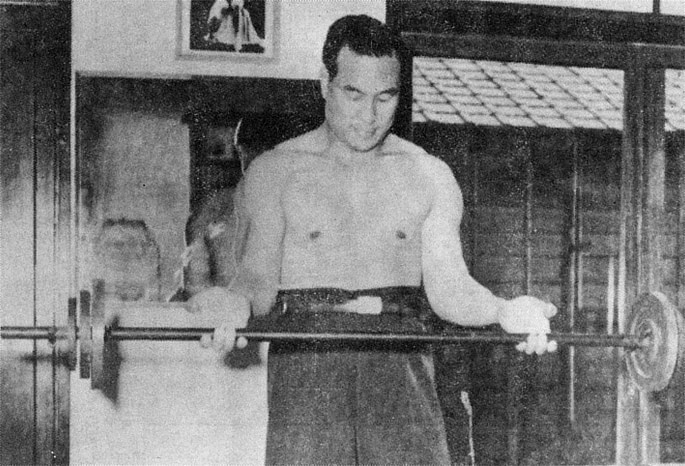
Source: 日本スポーツ出版社, Public domain, via Wikimedia Commons
Masutatsu Ōyama, founder of Kyokushin Karate, training perspective perfectly captures the immense technical depth found in the most difficult martial arts.


Long Mastery Time
Perhaps the defining characteristic of the hardest martial arts is the extraordinary time commitment required to reach mastery. While most physical activities might take months or years to become proficient, the most demanding martial arts often require decades of consistent practice.
The martial arts community has long recognized this through the saying "A black belt is just a white belt who never quit." Persistence over time is the true measure of a martial artist.
My own path bears this out. I've practiced Aikido for decades and taught it as a staff instructor, and I'm still refining techniques I first learned twenty years ago. In the hardest arts, there is no finish line.
Mental and Emotional Discipline
The psychological demands of certain martial arts can be just as challenging as the physical requirements. Many traditional systems place enormous emphasis on mental fortitude, emotional control, and spiritual development.
As Gichin Funakoshi wisely noted, "The goal of martial arts is to affect the mind and spirit, not just the body." The hardest martial arts push you to develop more than fighting techniques. They demand an entirely new mindset.
Danger Level
Some martial arts involve inherently higher risk of injury or physical trauma. Full-contact styles built around realistic combat often place students in genuinely dangerous situations. They must develop technical skill and mental resilience in the face of potential harm.
The 10 Hardest Martial Arts in the World
After examining martial arts systems worldwide, I've identified what I consider to be the ten most challenging disciplines to master. Each demands extraordinary commitment across multiple dimensions - physical, technical, mental, and emotional.
Brazilian Jiu-Jitsu (BJJ)
Brazilian Jiu-Jitsu stands out as possibly the most difficult martial art to master for several compelling reasons. BJJ focuses on ground grappling, demanding practitioners master numerous complex techniques and movements at every stage of progress, requiring immense time and dedication. The physical demands are extraordinary, with training sessions that challenge even elite athletes.
What makes BJJ particularly difficult is the depth of its technical system. It can take a trainee up to a year of practice just for their body to get used to BJJ. It's a mentally and physically taxing discipline, and it demands a level of flexibility that only develops over time.
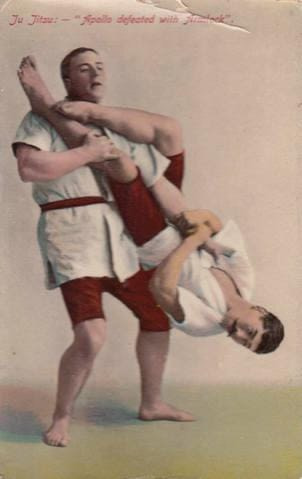

The progression system in BJJ is notoriously slow. A black belt in Brazilian jiu-jitsu commonly takes more than several years to earn, with the average time frame around 10 years of consistent training before reaching this expert level. Some elite practitioners like Ryron Gracie suggest that with focused training, a black belt should take about 7 years. Even that is far longer than most other martial arts require.
What I've observed in my years training alongside BJJ practitioners is that the mental challenges are equally significant. The art forces you to develop extraordinary problem-solving abilities under physical duress. As your opponent works to defeat you, you must analyze positions, anticipate movements, and execute precise counters all at once. You do it while managing discomfort, fatigue, and the need for proper recovery techniques.
Muay Thai
Known as "The Science of Eight Limbs," Muay Thai originated in Thailand and has earned its reputation as one of the world's most demanding combat sports. Using punches, kicks, elbows, and knees, Muay Thai fighters develop devastating striking abilities through notoriously brutal training methods.
What makes Muay Thai so challenging is its emphasis on conditioning and pain tolerance. Muay Thai is an aggressive system. The primary objective is to hurt the opponent as much as possible with every punch, kick, knee, or elbow strike. That focus on power and aggression makes it extraordinarily demanding physically.
The training methodology is famously difficult. Traditional Thai camps involve running miles before dawn, hundreds of kicks on heavy bags, and endless rounds of pad work. Regular full-contact sparring meets the conditioning demands of elite athletes. Conditioning the shins - a process that literally deadens nerves through repeated impact - is perhaps the most notorious aspect of Muay Thai training.
From my experience watching Muay Thai fighters train, I've been struck by their extraordinary mental toughness. The willingness to exchange powerful strikes and absorb heavy punishment takes two things: injury prevention strategies, and a mental toughness few other martial arts demand.
Kyokushin Karate
Founded by Masutatsu Oyama in 1964, Kyokushin is widely regarded as one of the hardest karate styles in the world. It's a full-contact system that emphasizes realistic combat and intense physical conditioning.
Kyokushin's extreme difficulty stems from several factors. It's known for testing a fighter's pain threshold in a way few other martial arts do. Taking bareknuckle punches, knees, and elbows over multiple rounds is one of the most punishing experiences in any martial art.
I came up in Isshin Ryu Karate as a teenager, so I know firsthand how demanding traditional karate training can be. Kyokushin takes that foundation and strips away the restraint. Its full-contact ethos asks more of the body than most traditional dojos ever will.
The style's founder was legendary for his toughness, reportedly fighting and killing bulls with his bare hands and engaging in 300-man kumite challenges. This spirit of extreme challenge permeates Kyokushin training, with practitioners regularly engaged in grueling conditioning exercises and full-contact sparring.
What makes Kyokushin particularly demanding is its combination of technical precision with raw power. Practitioners must develop perfect form while also building the physical strength and mental fortitude to deliver and receive devastating strikes. The system's testing requirements, particularly at higher levels, involve brutal endurance challenges requiring recovery protocols for managing joint stress that push many practitioners to their breaking point.
Sambo (Combat Sambo)
Sambo was developed for the Soviet Red Army in the 1920s. The name is a Russian acronym for "self-defense without weapons." It blends judo, wrestling, and regional grappling styles into a highly effective combat system.
Even though Sambo has been around since the 1920s, it wasn't receiving much attention from the public until Sambo-trained fighters started winning major fights in MMA. In some ways, Sambo resembles modern MMA fighting as a unique mixture of techniques from different martial arts like judo, jujutsu, and various styles of wrestling.
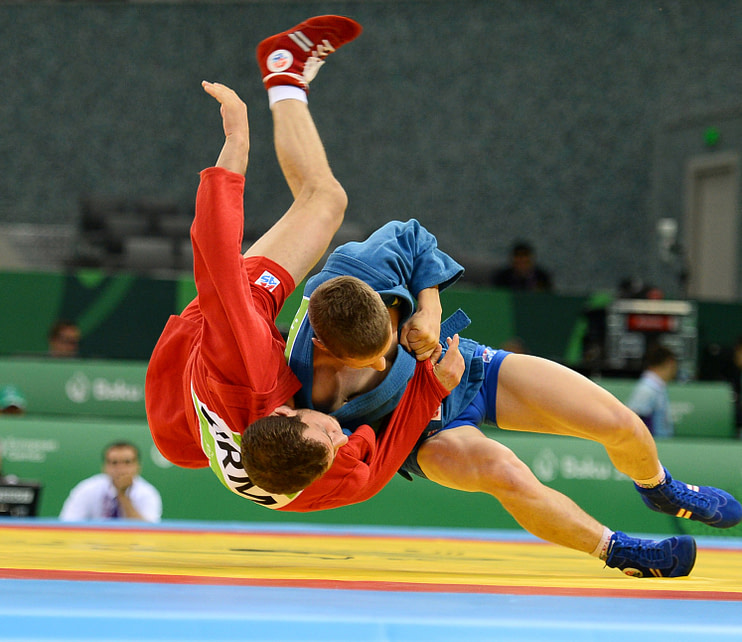
Source: Presidential Press and Information Office, CC BY 4.0, via Wikimedia Commons
Combat Sambo, the military variant that includes strikes along with grappling techniques, is particularly challenging. It was designed for real combat. The system includes kicks and punches, along with brutal techniques like headbutts, which fighters can use at any moment during a fight. This comprehensive approach requires mastery across multiple fighting domains.
The technical breadth of Sambo is extraordinary, combining throwing techniques from judo, takedowns from wrestling, and a vast array of submissions including its signature leg locks. This diverse technical arsenal makes Sambo exceptionally difficult to master, requiring years of dedicated practice across different fighting ranges and scenarios.
Lethwei
Often called "The Art of Nine Limbs," Lethwei is an ancient martial art from Myanmar that many consider to be among the most brutal fighting systems in existence. It allows punches, kicks, knees, elbows, and headbutts - making it even more comprehensive than Muay Thai.
What makes Lethwei extraordinarily difficult is its extreme ruleset and training methods. Lethwei fighters compete bareknuckle without wearing any padded boxing or open-fingered gloves, only wrapping their hands in gauze. The emphasis is on throwing each strike with full power with the goal of finishing the fight, resulting in a high injury rate.
Traditional Lethwei contests historically had no judges and continued until one fighter was knocked out or could not continue. While modern competitions have adopted some safety measures, the art remains incredibly demanding both physically and mentally.
From my perspective as a martial arts instructor, what makes Lethwei particularly challenging is the headbutt. The technique is difficult to master safely, and it adds a dangerous dimension to both offense and defense. Few martial arts require such complete striking skills while managing training injuries and building the fortitude to engage in such high-risk exchanges.
Wrestling
One of humanity's oldest combat sports, wrestling exists in various forms across cultures worldwide. Whether Greco-Roman, freestyle, folkstyle, or traditional variants, wrestling consistently ranks among the most physically demanding martial arts.
The difficulty of wrestling stems from its intense physical requirements and technical complexity. Wrestlers develop extraordinary levels of strength, explosiveness, endurance, and body awareness through grueling training regimens. The sport demands complete physical commitment, with successful practitioners typically training multiple times daily from a young age.
Wrestling skills are highly transferable to other combat sports, as wrestlers are tough and athletic and can control where a fight takes place with their takedown skills. The intensity and mindset of wrestling also prepare practitioners for real-life conflicts.
I've followed MMA since UFC 1 in 1993, which took place in my home state of Colorado. Watching elite wrestlers impose their will inside the cage, year after year, convinced me of something simple: the fighter who decides where the fight happens usually decides how it ends.
What makes wrestling particularly challenging is the mental toughness required. The physical discomfort of training, the effective need for a recovery routine, strict weight management, and the one-on-one nature of competition create psychological pressures few other sports match. Wrestlers must develop extraordinary resilience and competitive drive to succeed at higher levels.
Kung Fu (Shaolin and other styles)
Kung Fu encompasses hundreds of distinct Chinese martial arts styles, each with unique characteristics. The Shaolin system, with its origins in Buddhist monasteries, is perhaps the most famous and represents one of the most comprehensive martial arts systems in existence.
What makes traditional Kung Fu extraordinarily difficult is the sheer breadth and depth of its technical curriculum. Many styles contain thousands of techniques organized into intricate forms (kata) that take years to learn and decades to master. The precision required in executing these techniques compounds the difficulty.
"Learning Kung fu has only one purpose: To train one's reaction into a natural response. Such reaction is essential." This idea of training until techniques become instinctive requires extraordinary commitment.
Traditional training methods add another dimension of difficulty. Authentic Shaolin training involves grueling conditioning exercises specifically designed to develop attributes needed for fighting techniques. Stone locks, weighted weapons, stance training held for hours, and iron palm conditioning represent just a few of the demanding physical practices.
Pankration
An ancient Greek combat sport introduced to the Olympic Games in 648 BCE, Pankration combined wrestling and striking in what many consider the original mixed martial art. Modern variants attempt to recreate this comprehensive fighting system.
The exceptional difficulty of Pankration stems from its requirement for mastery across all fighting ranges. Practitioners must develop proficiency in striking, clinching, throwing, and ground fighting - a comprehensive skill set that few other traditional martial arts demand.
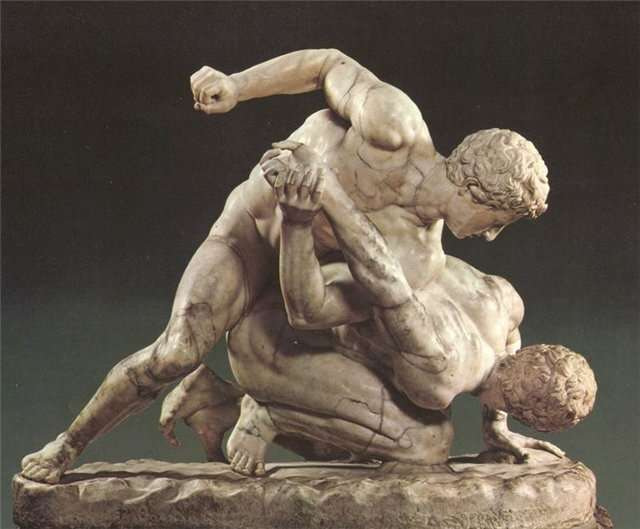
The sport's ancient origins reflect its brutal nature. Historical accounts describe matches continuing until submission or unconsciousness, with only biting and eye-gouging prohibited. Modern Pankration maintains much of this intensity while incorporating contemporary training methods.
What makes Pankration particularly challenging is the strategic complexity of integrating different fighting domains. Practitioners must develop the ability to transition seamlessly between striking and grappling, requiring years of practice to develop effective timing and tactical awareness.
Krav Maga
Developed for the Israeli Defense Forces, Krav Maga is a modern self-defense system designed for real-world violence. It incorporates techniques from boxing, wrestling, judo, and other martial arts, focusing on efficiency and practicality in dangerous situations.
What makes Krav Maga exceptionally difficult isn't technical complexity but psychological intensity. Training deliberately creates stress responses, often incorporating multiple attackers, weapons, and environmental factors to simulate genuine threats. This pressure-testing approach creates unique mental and emotional challenges.
Unlike competitive martial arts, Krav Maga training focuses on worst-case scenarios - armed assailants, multiple attackers, and life-threatening situations. This orientation toward extreme violence requires practitioners to develop extraordinary mental fortitude.
The system's emphasis on continuous fighting through injury also adds significant difficulty. Krav Maga training deliberately develops the ability to sustain an attack despite pain or disadvantage, requiring practitioners to overcome natural self-preservation instincts.
Taekwondo (Traditional & Competitive Sport)
Korea's most famous martial art, Taekwondo is renowned for its dynamic kicking techniques. While Olympic-style competition emphasizes sport aspects, traditional Taekwondo represents a comprehensive fighting system with extraordinary technical demands.
What makes Taekwondo exceptionally challenging is the physical requirements for its signature techniques. The high, spinning, and jumping kicks demand extraordinary flexibility, balance, timing, and explosive power. Few martial arts require such physical attributes for their core techniques.
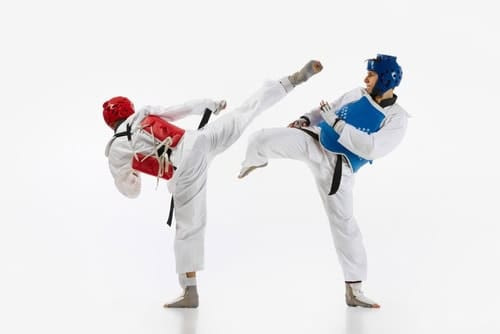
Source: Master1305, Standard License, via Shutterstock
The progression system in traditional Taekwondo is notoriously demanding. Advancement through belt ranks typically requires memorization of complex forms (poomsae), breaking demonstrations, and combative applications, creating a steep technical learning curve.
Competition at higher levels adds another dimension of difficulty. Olympic-style Taekwondo requires competitors to develop extraordinary speed, precision, and tactical awareness. The ability to execute complex techniques against resistant opponents requires years of dedicated practice.
Final Thoughts
After exploring the world's hardest martial arts, one truth becomes apparent: difficulty is multidimensional. Brazilian Jiu-Jitsu's technical complexity, Muay Thai's physical brutality, Kyokushin's pain tolerance requirements, and Krav Maga's psychological intensity each present unique challenges. The "hardest martial art to learn" ultimately depends on individual attributes, learning styles, and personal goals.
In my four decades of martial arts experience, I've come to appreciate that the question isn't just "what is the hardest martial art?" It's really "which martial art challenges you in the ways you need to grow?" For some, the mental discipline of traditional arts provides the greatest challenge. For others, the physical demands of combat sports present the ultimate test.
What martial art has challenged you the most? Are you currently training or considering starting your journey in one of these demanding disciplines? I'd love to hear your experiences and answer any questions you might have about these formidable fighting systems. Share your thoughts in the comments below!

Frequently Asked Questions
What is the hardest martial art in the world?
The hardest martial art depends on your measure. Brazilian Jiu-Jitsu ranks highest for mastery time (10,000+ hours). Muay Thai demands the most physical conditioning and carries high injury risk. Kyokushin Karate combines all four difficulty factors—technique depth, physical demand, mental discipline, and danger. The answer depends on whether you prioritize technique complexity, physical toll, mental fortitude, or danger level.
What makes a martial art difficult?
A martial art becomes difficult when it combines: high physical demand (conditioning, power, endurance), complex techniques requiring years to master, long time to competence (5–10 years or more), mental and emotional discipline under stress, and genuine danger (injury or knockout risk). Arts like BJJ, Muay Thai, and Kyokushin demand all five; arts with only one or two criteria are accessible but slower to master.
Is BJJ harder than Muay Thai?
BJJ and Muay Thai are hard in different ways. BJJ requires longer mastery time—10,000+ hours to reach expert level, with emphasis on technical depth and problem-solving. Muay Thai demands higher physical conditioning and carries more acute injury risk; competence arrives faster but the physical toll is severe. For pure technical mastery, BJJ is harder; for immediate physical demand, Muay Thai is harder.
How long does it take to master a martial art?
The '10,000 hour rule' applies to the hardest arts. BJJ and Kung Fu typically require 5–10 years of consistent training to reach mastery. Muay Thai can reach intermediate skill in 1–2 years but mastery takes longer. Wrestling and Judo demand early-life training for elite performance. Most of the arts in this ranking require at least 3–5 years of serious training before reaching competent instructor level.
Which martial art is the most dangerous?
Lethwei (Burmese boxing) is considered the most dangerous, allowing headbutts and lacking protective regulations compared to other striking arts. Muay Thai and Kyokushin Karate also carry high injury rates due to full-contact training without heavy protective gear. Even grappling arts like BJJ cause long-term joint wear and cartilage damage from repetitive submissions.
Featured Image Source: Shaolin Kung Fu Training Center NYC