Mixed martial arts (MMA) is a full-contact combat sport that allows a wide range of fighting styles. As a result, it can be challenging to know which mma moves are most effective. In this article, I share the top mixed martial arts moves you should know. After all, the world of combat sports has evolved dramatically over the past few decades.
In the past, fighters practiced separate disciplines in isolation. Today, those disciplines have merged into the dynamic sport we know as mixed martial arts (MMA). However, this evolution is more than entertainment. It reflects the human drive to test, refine, and perfect the art of combat.
The beauty of MMA lies in its comprehensive approach. Unlike traditional martial arts that might focus exclusively on striking or grappling, MMA demands proficiency across multiple domains. As a result, fighters face unique challenges and opportunities as they build their skills.
Understanding these moves is essential for any MMA fighter, whether a beginner or a seasoned pro. I will also discuss the benefits of learning MMA techniques. So, if you're serious about becoming an MMA fighter, or if you're simply looking to expand your knowledge of the sport, this article is for you.
Why Learn MMA Techniques?
The cage door closes with a distinctive clang, and suddenly you're facing an opponent trained in multiple fighting disciplines. This scenario might seem intimidating—and it should be. That's because MMA fighting moves draw on centuries of combat knowledge. Continuous real-world testing has distilled them into their most effective forms.
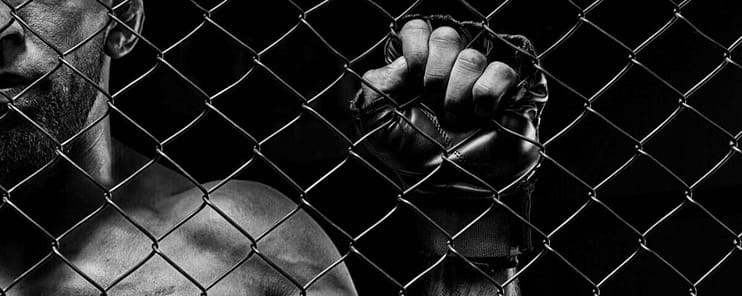
Source: Andy Gin, Standard License, via Shutterstock
Learning MMA techniques offers benefits far beyond just fighting ability. The training develops extraordinary physical conditioning, mental resilience, and practical self-defense skills applicable in real-world situations. In contrast, some traditional martial arts rarely test techniques against resisting opponents. In MMA, competition quickly exposes and discards techniques that don't work.
Striking Moves
Jab Punch
The humble jab might be the most important strike in combat sports. You throw this straight punch from the lead hand. It establishes distance, sets up power strikes, disrupts your opponent's rhythm, and shows you how they react. Former UFC champion Georges St-Pierre revolutionized MMA striking with his educated jab, demonstrating how a well-developed jab could control distance and set up takedowns.
Cross Punch
The cross is a power punch thrown from your rear hand that travels straight toward your target. To generate force, you transfer weight from your back foot to your front foot while rotating your hips and shoulders. It forms half of boxing's classic "one-two" combination and has led to countless knockouts in MMA competition.
Hook Punch
The hook punch travels in a circular path to strike your opponent from the side. You can throw a hook from either hand. When you rotate your hips and pivot on your foot, it generates tremendous power. Muay Thai legend Buakaw Banchamek's masterful use of hip rotation and weight transfer shows how true power in striking comes from the ground up through the kinetic chain.
Uppercut Punch
The uppercut travels upward to strike the opponent's chin or midsection. This powerful punch requires excellent timing but can be devastating when landed cleanly. Former UFC heavyweight champion Junior dos Santos used his uppercut to secure numerous knockouts throughout his career.
Overhand Punch
The overhand punch arcs over an opponent's guard to strike downward on the target. In MMA competition, the overhand has proven to be a great equalizer because it allows shorter fighters to overcome reach disadvantages. For example, Dan Henderson often threw a low feint before launching his famous "H-Bomb" overhand right. That punch led to multiple spectacular knockouts, most notably against Michael Bisping at UFC 100.
Roundhouse Kick
The roundhouse kick, one of the fundamental types of mma kicks, is a strike with the shin or foot in a circular motion, typically targeting the opponent's legs, body, or head. Former UFC champion Jose Aldo's devastating leg kicks consistently compromised opponents' mobility throughout fights, demonstrating how even basic techniques can become fight-defining weapons when perfected.
Front Kick
The front kick (sometimes called a push kick or teep) involves driving your foot straight forward into your opponent. This versatile technique can create distance, disrupt attacks, or cause significant damage when landed with full force. For instance, Anderson Silva knocked out Vitor Belfort with a front kick to the face at UFC 126. That moment showed how fundamental techniques can produce spectacular results with perfect timing.
Elbow Strike
Elbow strikes deliver devastating cutting power in close range. These strikes can be thrown upward, downward, or horizontally, making them versatile weapons in the clinch or while fighting against the cage. Thai fighters have long dominated the art of elbow strikes. Their key lesson is to fully commit and rotate your entire body to generate maximum impact.
Knee Strike
Knee strikes deliver tremendous power at close range. They work especially well from the clinch or against an opponent pressed against the cage. These strikes can target the head, body, or thighs, with variations including straight knees, curved knees, and flying knees.
Clinching Moves
Muay Thai Clinch
The Muay Thai clinch involves securing control of your opponent's head with both hands clasped behind their neck. From this position, you can deliver devastating knee strikes while controlling your opponent's posture and movement. Anderson Silva's mastery of the Thai clinch against Rich Franklin remains one of the most clinical demonstrations of this technique in MMA history.
Double-Underhooks
Securing underhooks involves positioning your arms underneath your opponent's arms in the clinch. Double-underhooks provide excellent control and create opportunities for takedowns or positional adjustments. The fighter who controls the underhooks often controls the clinch battle.
Dirty Boxing
Dirty boxing involves using a single-collar tie to hold your opponent in place while delivering punches with your free hand. This technique was popularized by Randy Couture, who used it effectively throughout his Hall of Fame career. In fact, Couture's approach revolutionized MMA strategy. He showed that the clinch could be a primary offensive position, not just a place to transition or rest.
Takedowns
Single-leg Takedown
The single-leg takedown involves securing one of your opponent's legs and using leverage to force them to the ground. Olympic gold medalist and former UFC champion Henry Cejudo demonstrated throughout his career how high-level wrestling can translate to MMA success, particularly with his ability to chain together takedown attempts when met with resistance.
Double-leg Takedown
The double-leg takedown involves changing levels, securing both of your opponent's legs, and driving through their hips to take them to the ground. Because it controls both legs at once, it leaves your opponent fewer ways to stay balanced.
Hip Throw
The hip throw uses rotational force to launch your opponent over your hip to the ground. This judo-derived technique can produce spectacular throws when executed with proper timing. Ronda Rousey's Olympic judo background made her hip throws some of the most visually impressive techniques in MMA history.
Grappling Positions
Guard Position
The guard position occurs when the bottom fighter wraps their legs around the top fighter's waist or controls them with other leg positions. Variations include full guard, half guard, butterfly guard, and specialized positions like rubber guard. Eddie Bravo revolutionized MMA guard play with his 10th Planet system, introducing positions specifically designed to be effective while absorbing strikes.
Mount Position
The mount position places the top fighter sitting on the chest or torso of the bottom fighter. This dominant position allows for effective striking while limiting the bottom fighter's defensive options.
Side Control
Side control positions the top fighter perpendicular to the bottom fighter, pinning them to the ground with body pressure and control. From here, the top fighter can deliver strikes or transition to more dominant positions.
Rear Mount (Back Control)
To take the back, you get behind your opponent and insert your hooks inside their thighs. Many consider this the most dominant position in grappling. Demian Maia's ability to take and maintain back control against elite opponents showcases the highest level of this skill.
Submission Holds
Triangle Choke
The triangle choke uses your legs to compress your opponent's neck and one arm, restricting blood flow to the brain. BJJ world champion Ryan Hall elevated triangle choke application to an art form, showing that proper angle and positioning matter far more than squeezing strength.
Rear-naked Choke
The rear-naked choke is applied from back control, compressing the sides of your opponent's neck to restrict blood flow. In fact, this high-percentage submission has been one of the most successful finishing moves in UFC history. Champions across multiple weight divisions have used it to secure victories.
Heel Hook
The heel hook targets the knee by twisting the heel, creating rotational pressure through the ankle and knee. John Danaher revolutionized MMA leg lock systems, teaching champions like Georges St-Pierre and Gordon Ryan. His systematic approach has transformed modern submission grappling, adding an entirely new dimension to ground fighting.
Defensive Techniques
Sprawl
The sprawl defends against takedown attempts by forcefully extending your legs backward while driving your weight down onto your opponent. Chuck Liddell built his legendary career on sprawl-and-brawl tactics, using excellent takedown defense to keep fights standing where his striking advantage could shine.
Sweep
Sweeps reverse positions by using leverage and timing to off-balance your opponent and move from bottom to top position. Marcelo Garcia's butterfly sweep remains one of the most effective position reversals in grappling, emphasizing creating momentum before the opponent realizes what's happening.
Final Thoughts
After spending decades training in martial arts and closely following MMA's evolution, I've developed a deep appreciation for the technical complexity that defines modern fighting. Still, the techniques covered here are just the foundation of what elite fighters bring to competition. True mastery comes from linking these moves with seamless transitions and knowing when to use each one.
The most successful fighters rarely have the most techniques. Instead, they perfect a select arsenal that suits their physical attributes and fighting philosophy. Take Khabib Nurmagomedov, who dominated opponents with a relatively limited but extraordinarily well-executed selection of wrestling and grappling techniques. For those beginning their MMA journey, focus first on building fundamental skills across all ranges of combat before specializing. Remember that consistent training under qualified coaches remains the only path to true technical proficiency.
Frequently Asked Questions
What are the Main Types of MMA Moves?
MMA moves fall into six broad groups: striking, clinching, takedowns, grappling positions, submission holds, and defensive techniques. Striking covers punches, kicks, elbows, and knees. Grappling covers positions like guard, mount, side control, and back control, plus submissions such as the rear-naked choke. True mastery comes from linking these moves with seamless transitions and knowing when to use each one.
What are the Basic MMA Moves for Beginners?
Start with the fundamentals in each range: the jab and cross on the feet, the Muay Thai clinch and underhooks in close, a single-leg takedown, and positions like guard and mount on the ground. The jab might be the most important strike in combat sports because it establishes distance and sets up power strikes. Focus first on building fundamental skills across all ranges of combat before specializing. Consistent training under qualified coaches remains the only path to true technical proficiency.
Which is a Common Skill Used for Mixed Martial Arts?
The most universally necessary skill in mixed martial arts is undoubtedly defensive wrestling. Even fighters who prefer striking must develop sufficient takedown defense to keep the fight in their preferred range. Nearly every UFC champion in history—regardless of their primary discipline—has demonstrated at least competent wrestling skills.
What is the Best MMA Move?
While no single technique works in all situations, the rear-naked choke deserves special mention. However, the rear-naked choke has statistically ended more high-level MMA fights than any other submission technique, making it arguably the most reliable finishing move in the sport. Fighters apply it from back control, which many consider the most dominant position in grappling.
What is the Most Effective Martial Art Move?
Effectiveness depends entirely on context, timing, and execution. Whether standing or on the ground, controlling where the fight takes place allows a fighter to maximize their strengths while exposing their opponent's weaknesses. The most successful fighters rarely have the most techniques; instead, they perfect a select arsenal that suits their physical attributes.
Featured Image Source: Master1305, Standard License, via Shutterstock